The digital world is evolving faster than ever, and blogging in 2026 will be more competitive and dynamic. To stand out, future-ready bloggers must prioritize smart blog tools that drive results and foster growth.
In this guide, you'll discover nine essential strategies, each designed to help you master content creation, SEO, analytics, automation, personalization, monetization, mobile optimization, security, and community engagement.
With new trends shaping the industry, now is the time to learn actionable insights and adopt the right approaches. Read on to future-proof your blogging journey and achieve lasting success.
Navigating the future of blogging means mastering new technologies, adapting to evolving reader demands, and staying ahead of the competition. In 2026, the landscape is changing faster than ever, and blog tools play a pivotal role in shaping success.

AI-driven blog tools are revolutionizing how content is created, curated, and optimized. In 2026, bloggers rely on advanced AI to generate articles, suggest topics, and even edit drafts. Recent studies reveal nearly 70% of bloggers have integrated AI into their workflows, streamlining repetitive tasks and boosting productivity.
Automation is not just about speed, but also about freeing up creative energy. From scheduling posts to handling social shares, automation empowers bloggers to focus on strategy and storytelling. For a deeper dive into future trends, check out AI's Impact on Blogging in 2026.
Readers now expect unique, tailored experiences with every visit. Modern blog tools enable dynamic content personalization, adjusting recommendations and layouts based on user behavior. Statistics show that personalized content can boost engagement rates by up to 50% compared to generic posts.
Examples include quizzes that guide readers to relevant articles or dynamic product suggestions. Personalization engines help bloggers build loyalty while increasing session duration and lowering bounce rates.
Search engines are becoming smarter, rewarding relevance and intent over keyword stuffing. In 2026, blog tools must align with major algorithm changes focusing on semantic search and user intent. Structured data and rich snippets are now essential for securing top spots in search results.
Bloggers who leverage these tools can track real-time SERP performance and adapt quickly to updates. Staying informed and agile ensures content remains discoverable, no matter how the algorithms evolve.
Relying on a single income source is risky. In 2026, successful bloggers diversify with ads, affiliate links, digital products, and memberships, all managed with robust blog tools. Data highlights that bloggers with multiple income streams earn up to 3x more than those who do not diversify.
However, managing these streams presents its own challenges. The right tools help track revenue, automate payouts, and provide insights to maximize earnings while maintaining a seamless reader experience.
With increasing regulations and tech-savvy audiences, data privacy is non-negotiable. Blog tools now offer features like SSL encryption, automatic backups, and real-time monitoring. Recent reports indicate that blogs with poor security are 60% more likely to suffer costly breaches.
Maintaining compliance and building trust means using security-focused tools and staying updated on best practices. Prioritizing privacy safeguards your reputation and protects your readers.
As we move into 2026, the digital landscape is more competitive than ever. Bloggers need to adopt forward-thinking blog tools strategies to stay ahead, maximize efficiency, and secure long-term growth. Below, we break down nine essential approaches every future-ready blogger must master.
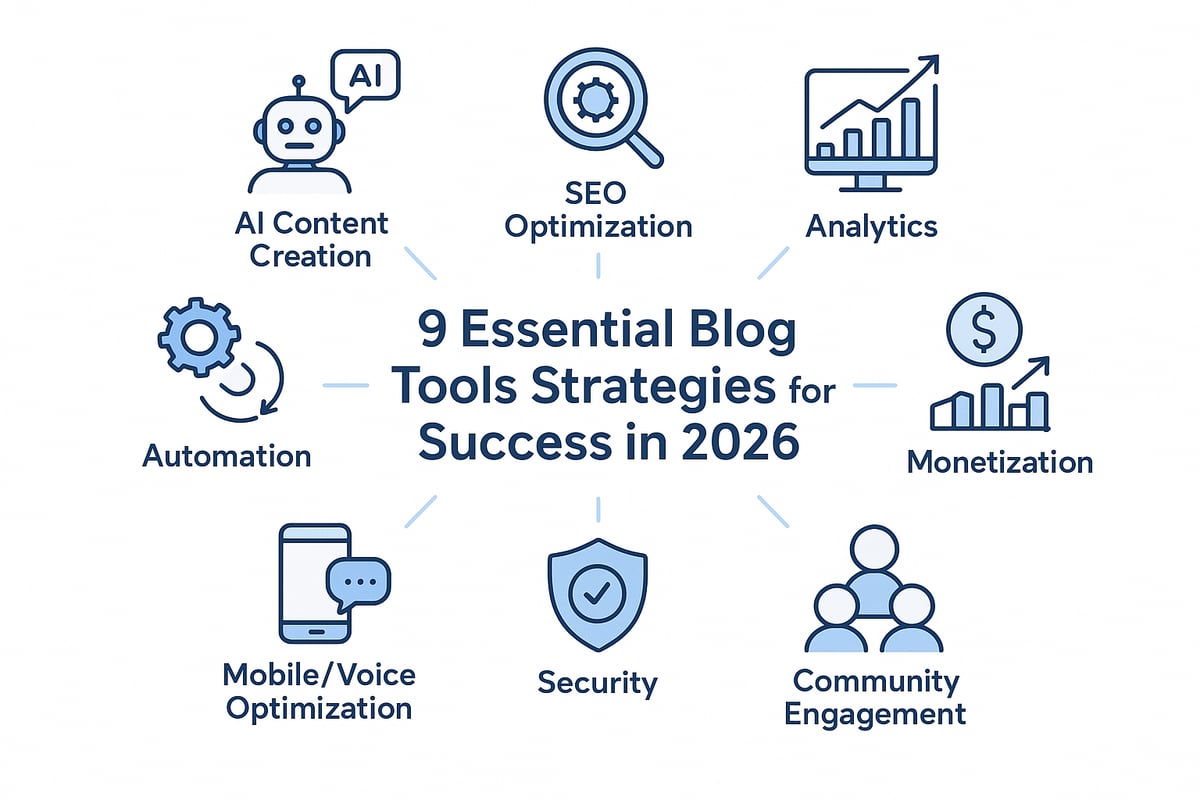
AI-powered blog tools are revolutionizing how content is ideated, drafted, and refined. These platforms streamline brainstorming by generating topic ideas, outlines, and even full drafts. Bloggers can leverage AI to overcome writer’s block and boost creativity.
For instance, AI can generate articles, headlines, email copy, and more. This versatility allows bloggers to maintain a consistent publishing schedule and adapt quickly to trending topics. When choosing blog tools for AI content creation, look for features like natural language processing, tone customization, and robust editing capabilities.
However, authenticity must remain a priority. Human oversight is essential to ensure your unique voice shines through. It’s important to blend AI efficiency with personal expertise for maximum impact.
Selecting the right AI-powered blog tools means considering ease of use, integration options, and quality of output. For a deep dive into the latest advancements, explore Essential blog tools for 2026.
Modern SEO blog tools analyze competitors, uncover keyword gaps, and adapt to ever-changing search engine algorithms. These platforms harness AI to refine keyword research, optimize on-page content, and monitor technical SEO.
Integration with the latest search updates is crucial. Advanced blog tools keep you aligned with algorithm shifts, ensuring your content stays visible. Tracking SERP performance and backlink profiles is easier than ever with unified dashboards.
Best practices include regular audits, using semantic keyword clusters, and implementing structured data. With the right SEO blog tools, bloggers can boost rankings and drive consistent organic traffic.
Continuous improvement is key. Review analytics, refine strategies, and stay informed about industry changes. Advanced blog tools empower you to adapt quickly and outperform competitors.
Understanding your audience means tracking user behavior, engagement, and conversions. Analytics blog tools pull data from multiple channels into unified dashboards, simplifying insights.
Look for features like real-time analytics, customizable reports, and multi-platform integration. These blog tools help you identify which content resonates and where opportunities exist to increase revenue.
Data-driven decisions set successful bloggers apart. Use analytics blog tools to test headlines, optimize CTAs, and measure ROI. Interpreting data correctly can reveal hidden growth levers.
To select the best analytics blog tools, prioritize ease of setup, visualization options, and scalability. Regularly reviewing performance dashboards ensures your blog evolves with your audience.
Automation is transforming how bloggers manage editorial calendars and content distribution. Blog tools for scheduling automate publishing across platforms, from your website to social media and email.
By reducing manual work, automation blog tools minimize errors and free up creative time. Examples include auto-publishing blog posts, scheduling social media updates, and managing email newsletters in advance.
Balance automation with authentic interaction. While blog tools streamline repetitive tasks, direct engagement with readers remains vital for building loyalty.
A streamlined content pipeline boosts productivity and helps maintain a steady flow of fresh content. Choose automation blog tools that integrate with your existing systems and offer robust support.
Personalization engines are game-changing blog tools that tailor content recommendations and layouts to individual users. By analyzing reader behavior, these systems boost session duration and reduce bounce rates.
Personalized blog tools increase engagement by serving relevant articles, dynamic calls-to-action, and adaptive layouts. Data shows readers are more likely to return to blogs that feel customized to their interests.
When evaluating personalization blog tools, consider ease of integration, real-time adaptability, and privacy compliance. Ethical use of personalization is critical, so always respect user data and consent.
Ultimately, these blog tools foster deeper connections with your audience, driving loyalty and long-term growth.
Diversifying income streams is essential for sustainability. Secure payment blog tools enable bloggers to sell digital products, manage memberships, and run affiliate programs with confidence.
Look for monetization blog tools that provide flexible payment gateways, detailed analytics, and compliance with global regulations. Tracking revenue streams ensures you can optimize for maximum profitability.
Best practices include clear disclosures, user-friendly checkout processes, and regular security audits. Successful blog monetization relies on both robust blog tools and a transparent, trustworthy approach.
Examples of effective monetization models include tiered memberships, exclusive content, and affiliate partnerships. Choose blog tools that align with your long-term growth strategy.
Mobile and voice search now account for a significant share of traffic. Responsive design, fast loading times, and accessibility are non-negotiable features for modern blog tools.
Structured data and conversational content are essential for ranking in voice search results. Blog tools should help you optimize meta tags, implement schema, and test mobile usability.
Tips for improving mobile experience include compressing images, using large tap targets, and simplifying navigation. Voice search optimization starts with natural language and question-based content.
Recent statistics confirm the surge in mobile and voice adoption, making these blog tools indispensable for reaching a wider audience.
Cyber threats are evolving, making security-focused blog tools a top priority. Features like firewalls, automated backups, SSL certificates, and real-time monitoring protect your site from attacks.
Regular updates and vulnerability assessments are essential to stay ahead of hackers. Poor blog security can lead to data breaches, loss of trust, and even regulatory fines.
Choose security blog tools that offer easy setup, ongoing support, and compliance with data protection laws. Establish a routine for testing and improving your security posture.
By investing in strong security blog tools, you safeguard both your content and your readers’ trust.
Building a loyal audience requires interactive blog tools such as comment sections, forums, polls, and live sessions. These features transform passive readers into active participants.
Effective blog tools for community management include moderation dashboards, anti-spam filters, and analytics for tracking engagement levels. Increased participation not only boosts retention but also enhances SEO.
Encourage meaningful conversations by asking questions, highlighting user contributions, and hosting regular live events. Community-driven blogs often see higher loyalty and organic growth.
By leveraging interactive blog tools, you create a vibrant ecosystem that supports both your content and your brand’s long-term vision.
Selecting the perfect blog tools for 2026 is about more than chasing trends. Your choices must align with your unique goals, audience, and workflow. With the digital landscape shifting rapidly, the right blog tools will empower you to adapt, grow, and thrive.

Before investing in blog tools, start by mapping out your content type, target audience, and monetization plans. Are you focused on long-form articles, multimedia posts, or niche topics? Consider your traffic sources and what your readers value most.
Ask yourself:
What features do I need for content creation, SEO, or analytics?
How does my audience prefer to engage?
Do I plan to monetize with ads, digital products, or memberships?
Scalability is critical. Choose blog tools that can grow with you as your content and audience expand. Flexibility matters too, so prioritize platforms that adapt to new trends without major overhauls.
Seamless integration is non-negotiable when choosing blog tools. Your new tools should work effortlessly with your current CMS, email platforms, and analytics dashboards.
Test for compatibility before committing. Many providers offer free trials or demos, so use these to spot potential conflicts. Avoid vendor lock-in by selecting tools that support open standards and easy data export.
A checklist for integration:
Confirm API availability
Check for plug-ins or direct integrations
Review support for your existing workflow
Choosing blog tools that integrate smoothly will save you time and frustration as your tech stack evolves.
Balancing cost and value is essential when evaluating blog tools. Free solutions may be tempting, but paid options often provide advanced features, better support, and regular updates.
Here’s a quick comparison:
Feature | Free Tools | Paid Tools |
|---|---|---|
Core Features | Basic | Advanced |
Support | Community-based | Dedicated |
Updates | Infrequent | Regular |
Scalability | Limited | Robust |
Calculate the return on investment by tracking time saved, increased traffic, or higher revenue. Reliable customer support and ongoing updates are worth the added cost for most serious bloggers.
If you’re exploring AI-powered platforms, check out AI tools for content creators for a rundown of options and benefits.
Blog tools constantly evolve, making ongoing learning a must. Subscribe to industry newsletters, join online communities, and follow trusted blogs to stay updated on new features and best practices.
Consider setting aside time monthly for tool audits and skill-building. This habit will help you spot opportunities and keep your blog ahead of algorithm changes or platform updates. For those interested in the latest SEO shifts, the SEO Algorithm Updates Timeline is a valuable resource.
Embracing a mindset of growth and adaptation ensures your blog tools always serve your goals, not the other way around.
Implementing new blog tools can feel overwhelming, but with a clear approach, you can maximize their impact. Start by mapping out a practical roadmap that aligns with your blog's vision and growth targets. This ensures you do not lose focus as you adopt new solutions.

Begin by auditing your current blog tools. Identify which features are essential and which ones are missing. Next, list out your priorities, such as improving SEO or enhancing user engagement.
Audit existing tools and workflows
Identify gaps and set clear goals
Prioritize tool adoption in phases
Test new blog tools before full rollout
Document processes for future reference
A phased approach prevents disruption. Start small, measure results, and scale up as you see success. This step-by-step method lays a strong foundation for seamless integration.
Training is vital to make sure everyone maximizes the value of your blog tools. Develop simple guides and video tutorials for each tool. Encourage team members to ask questions and share tips.
Host short onboarding sessions for new contributors. Keep documentation updated, so everyone understands how to use the latest features. Assign tool champions who can help others troubleshoot or learn new updates.
Investing in training now will save time and reduce mistakes down the road. Well-trained teams keep your blog efficient and adaptable.
Set clear KPIs to track the performance of your blog tools. Use dashboards to monitor content reach, user engagement, and monetization results. Regularly review analytics to spot trends and opportunities for improvement.
Create feedback loops with your team and audience. Adjust strategies based on what works best. For example, if your monetization tools are not delivering, explore additional tactics like Monetizing your blog with AI to boost results.
Continual measurement ensures your blog tools stay aligned with your goals and adapt to changes in the digital landscape.
Many bloggers make the mistake of overcomplicating their tech stacks or neglecting updates. To stay agile, keep your list of blog tools streamlined and regularly remove unused options.
Common Pitfall | Solution |
|---|---|
Too many overlapping tools | Consolidate and audit quarterly |
Skipping updates or training | Schedule regular reviews |
Ignoring analytics | Set up automated reporting |
Inflexible to new tech | Stay active in industry forums |
Stay proactive about learning new trends and features. Regularly review your strategy to ensure your blog tools remain future-ready and competitive.
As you dive into these essential blog tool strategies for 2026, it’s clear that staying ahead means embracing AI, automation, and fresh monetization ideas. If you’re excited to put these insights into action and build smarter income streams, you won’t want to miss what’s coming next. We’re about to drop our AI Side Hustle Toolkit—packed with resources to help you launch, grow, and profit from your blog using the latest AI innovations. Ready to get a head start on the future of online business? Keep an eye out for the AI Side Hustle Toolkit drop coming soon.