Built a digital product in 7 days Here’s the exact play. Most people struggle with how to sell digital products online because they miss what buyers truly need and fail to earn trust. The result is low sales and wasted effort.
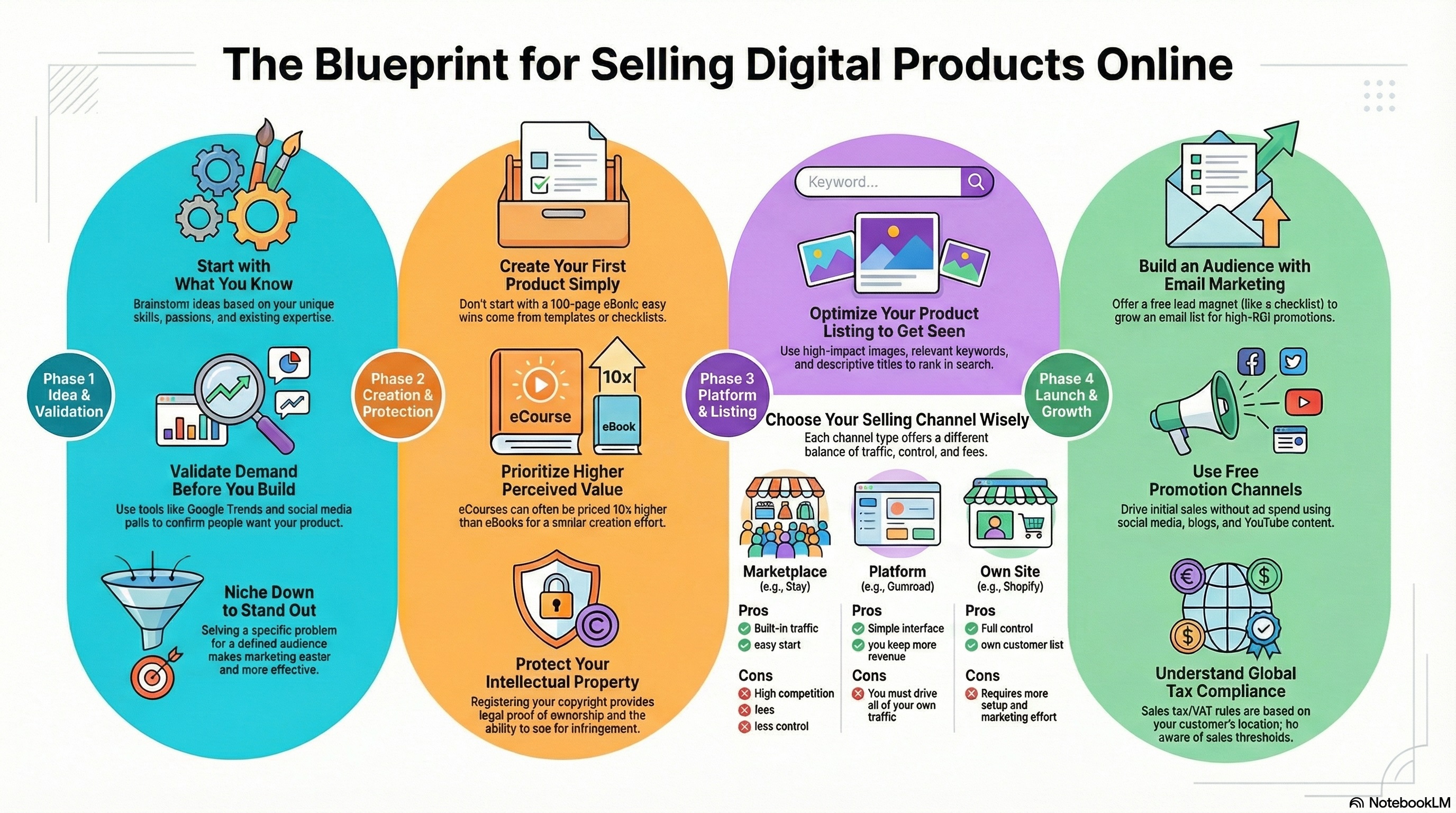
This guide gives you a proven roadmap to succeed in 2026, even if you’re a beginner or a small team. You’ll discover how to pick a niche that actually sells, design offers people want, validate with real proof, set up a funnel that converts, drive targeted traffic, launch for maximum impact, and grow beyond your first sale.
By following these steps, you’ll avoid common mistakes and turn your knowledge into a profitable digital product business.

Building a digital product in 7 days sounds exciting, but most creators quickly discover a harsh truth: what you want to sell often isn’t what buyers actually need. The top reason digital products flop is a failure to solve a real, urgent pain point. Many beginners jump into product creation without first asking, “Is anyone desperate for this solution?” That’s why learning how to sell digital products online starts with understanding your audience’s true struggles.
Skipping audience research is a classic mistake. If you don’t spend time on forums, reviews, or support tickets, you’ll miss out on the language, complaints, and “I wish there was…” moments that signal real demand. As one Quora contributor wisely said, “Don’t waste your time, effort, and capital—do audience research first.” When you ignore this advice, you end up with misaligned offers that nobody wants.
Here are the most common reasons digital products miss the mark:
Overcomplicating the product with too many features or modules.
Ignoring quick wins that help buyers see results fast.
Skipping proof, like testimonials or screenshots, so buyers remain skeptical.
Using generic messaging that doesn’t speak to a specific pain point.
For example, imagine launching an ebook or course that promises “productivity tips” but never addresses a concrete problem like “overcoming email overwhelm for freelancers.” These generic products typically see low sales and high refund rates. On the other hand, creators who focus on boring but painful issues—like tax prep templates or onboarding kits—see better results and fewer refunds. The difference is night and day.
The digital product market is booming. Transactions have jumped by 70 percent in the past two years, but only a small percentage of products become profitable. Why? Buyers are more skeptical than ever. Without real social proof or clear, specific outcomes, even a beautiful landing page won’t convert. In fact, 68% of internet users pay for digital content monthly, but they expect results, not empty promises.
To bridge the trust gap and truly master how to sell digital products online, center your offer around a “boring but painful” problem—something people need solved urgently, even if it isn’t trendy. Bundle a core solution with actionable templates and a quickstart guide. Use real complaints and micro-testimonials as proof. Keep your landing page simple: problem, promise, proof, and a clear call to action. This approach builds trust and makes your digital product stand out.
If you want your first sale and future growth, avoid the urge to chase trends or overcomplicate. Instead, solve a real problem, show the proof, and make it easy for buyers to get results. That’s the foundation for how to sell digital products online in 2026.
Choosing the right niche is the foundation of how to sell digital products online. Many beginners jump straight to building, but the secret is to start with problems your audience actually faces. If you want your offer to convert, you need to solve a real, “boring but painful” problem people are already complaining about.

The first step in how to sell digital products online is to listen. Dive into forums, Reddit threads, Quora questions, and Facebook groups where your target audience hangs out. Search for posts that start with “I wish there was…” or “Does anyone know how to fix…”. These are golden clues.
Make a list of 5 to 10 real complaints or struggles. Look for pain points that come up again and again. For example, freelancers might complain about disorganized proposals or small business owners might need onboarding kits for new hires. These are not flashy, but they are urgent and persistent problems.
Here’s a quick checklist to uncover profitable problems:
Scan reviews of similar products for what’s missing or what frustrates buyers
Check support tickets or FAQs in your niche for repeated issues
Browse “help” posts on Reddit and Quora for raw, honest pain points
Avoid chasing trendy, overcrowded topics like “get-rich-quick” schemes or generic self-help. Instead, focus on niches like tax prep templates, workflow automation tools, or printable planners. These “boring but painful” areas often have less competition and higher demand.
Profitable Niche | Example Product | Reason for Demand |
|---|---|---|
Tax Prep for Freelancers | Editable tax spreadsheet | Solves recurring, stressful task |
Workflow Automation | Zapier/Notion templates | Saves time for small businesses |
Printable Planners | Daily/weekly planners (PDF) | Easy customization, instant use |
Once you’ve gathered pain points, the next step in how to sell digital products online is validation. Start small: send micro-surveys or DM a handful of people to confirm these problems are real, urgent, and people are willing to pay to solve them. Look for replies like “I’d buy this today if it existed”—that’s your green light.
Next, research existing offers on Gumroad, Etsy, and Creative Market. Check for:
Pricing ranges and sales volume
Low refund rates (indicates happy buyers)
Reviews mentioning quick results and ease of use
Products like printable planners and business templates consistently sell and have minimal refunds. Avoid categories where everyone is selling the same generic eBook or course. The data shows templates, courses, and digital art remain top sellers, but only when they address specific pain points.
Bundle your offer for maximum appeal. Combine a core solution (like a video guide or main template), a quickstart checklist (for fast wins), and editable templates (for customization). This approach not only increases perceived value but also helps buyers get results quicker.
If you want to streamline research and validation, explore AI tools for content creators. These tools can help automate audience research, organize feedback, and even analyze competitor products, saving you hours while increasing your chances of finding a winning niche.
Remember, the key to how to sell digital products online is focusing on real, validated problems and offering a bundled solution that delivers immediate value. Start with the pain, validate demand with data, and you’ll be far ahead of creators chasing the next trend.
Most digital products never reach their sales potential because their offers lack clarity, focus, and real-world proof. If you want to master how to sell digital products online, you need to treat your offer like a solution to a specific, painful problem.
Your digital offer is not just a product—it is a promise of transformation. The right structure can make your audience see instant value and take action quickly.

Start by identifying a boring but painful problem. Look for pain points that show up over and over in forums or support tickets. Your goal is to bundle a core solution with a quickstart and at least one plug-and-play template.
When thinking about how to sell digital products online, ask: Does your offer help buyers get a win in minutes, not weeks? The best offers are easy to use, focused, and answer a real need.
Bundle your offer for maximum perceived value. Structure it like this:
Core solution: A guide, video walkthrough, or mini-course.
Quickstart checklist: A simple, actionable list to get immediate results.
Templates: Editable files (Canva, Notion, Excel) for fast customization.
This approach is proven—top sellers on Gumroad and Etsy use bundles to increase conversions and reduce refunds. Bundling also supports building multiple income streams, since you can repurpose templates and checklists into new products.
Buyers are skeptical, especially when learning how to sell digital products online. Build trust by including:
5–10 screenshots of real complaints, before/after results, or buyer wins.
2–3 micro-testimonials, such as short quotes from customers or beta testers.
Proof points turn your offer from “just another product” into a credible solution. Use real feedback, not fake reviews.
Offer your digital product in multiple formats. For example, provide PDFs for easy downloading, videos for walkthroughs, and editable files for quick tweaks.
Set clear usage terms. Will buyers get lifetime access? Free updates? Limited-time bonuses? Scarcity and clarity drive urgency—both are critical when you are learning how to sell digital products online.
Research similar offers on Gumroad, Etsy, and Creative Market. Price your product for high perceived value, but keep the entry point accessible (think $19–$99 for most bundles).
For example, a "Freelancer Proposal Kit" could include:
Proposal templates (Word, Google Docs)
Video walkthrough on customization
Quickstart checklist
FAQ section for common objections
This structure helps buyers take action fast, builds confidence, and positions you as an authority in how to sell digital products online.
To recap, create a digital offer that solves a real pain, bundles core solutions with quickstart tools, and uses proof to build trust. Mix multiple formats, add clear bonuses, and set smart pricing. Focus on outcomes, not just features. This is how to sell digital products online with confidence.
Setting up a high-converting sales funnel is the backbone of how to sell digital products online successfully. Many creators overcomplicate their funnels, but the most effective approach is a simple, one-page landing that walks buyers from pain to promise to proof, then a decisive call to action. Let’s break down each piece so you can build your own funnel in days, not weeks.
Start your funnel with a single, focused landing page. This is the first step in how to sell digital products online that actually converts. Your page should open with a headline that calls out the exact pain point your product solves. Underneath, briefly describe the promise or transformation (“Organize your client projects in 15 minutes with the Notion Project Kit”).
Next, keep the layout clean. Use clear sections for the problem, your solution, and a bold, visual CTA button. Avoid clutter or distractions. This approach works for both beginners and small teams aiming for quick results.
Trust is the currency of how to sell digital products online. After your promise, immediately showcase authentic proof. Include 5 to 10 screenshots of real customer feedback, before-and-after results, or actual complaints that inspired your product. Layer in 2 or 3 micro-testimonials—short, punchy quotes from beta users or early buyers—right on the page.
This social proof bridges the trust gap and sets your offer apart from generic listings. Make sure each testimonial or screenshot highlights a specific outcome or relief from a real pain point.
Addressing buyer doubts is essential in how to sell digital products online. Add a FAQ section beneath your proof, answering questions like “Will this work for me?” or “How fast can I get results?” Use plain language and be transparent about who your product is best for.
Your call to action should be crystal clear. Use direct copy like “Download instantly and start in 5 minutes.” Highlight any bonuses or quickstart guides included. The goal is to remove hesitation and make the next step feel easy and risk-free.
Don’t rely only on your landing page. Building a simple email sequence is a proven way to boost how to sell digital products online. Start with a value-first email, such as a free tip or a demo video. Follow up with an email that addresses common objections, then share more proof—screenshots or testimonials.
Finally, send your main offer with urgency: a limited-time bonus or discount. Automate file delivery and onboarding instructions so buyers get instant access. This sequence not only increases conversions but also builds long-term trust for future launches.
Choosing the right platform is key for how to sell digital products online efficiently. Gumroad stands out for its fast setup and built-in analytics, perfect for solo creators. Shopify offers more customization and app integrations, but requires extra setup. Both handle payments and digital delivery smoothly.
A real-world example: The “7-Day Launch Kit” uses a one-page landing on Gumroad, packed with testimonials and a short demo video. Buyers get instant access, a quickstart checklist, and follow-up onboarding via email, making the experience seamless from first click to first result.
Building traffic and trust is the secret sauce in how to sell digital products online. Even the best offer will flop if nobody sees it or if buyers don’t trust you. This step is all about getting real eyes on your product and converting them into loyal customers.
Start with one main channel. When learning how to sell digital products online, don’t spread yourself thin. Choose the platform where your target audience already hangs out. Here’s a quick comparison:
Channel | Best For | Pros | Cons |
|---|---|---|---|
Twitter/X | Courses, creators | Fast reach, viral threads | Noisy, fast-moving |
TikTok | Templates, demos | Viral potential, visual | Short lifespan |
Niche communities | Trust, deep discussions | Slow build, strict mods | |
Printables, planners | Evergreen, search-friendly | Visual focus needed | |
YouTube/SEO | Tutorials, walkthroughs | Long-term, authority | More setup, time-heavy |
Plan your 7-day posting sprint. For how to sell digital products online in 2026, a tight, focused content blitz beats random posting. Outline seven days of action:
Day 1: Share your story and the pain point you solve.
Day 2: Demo a quick win or feature.
Day 3: Post a behind-the-scenes video.
Day 4: Share a real customer complaint and your fix.
Day 5: Drop a micro-testimonial or result screenshot.
Day 6: Host a mini Q&A or poll.
Day 7: Announce a waitlist or special bonus for launch.
Each post should address a real struggle, show proof, or deliver value. This approach not only builds anticipation but also establishes you as a problem-solver.
Partner with a micro-influencer or community leader. Collaboration is a proven tactic in how to sell digital products online. Reach out to someone trusted in your niche, offer them early access, and suggest a co-hosted live, interview, or product walkthrough. Their endorsement can shortcut trust and bring new eyes to your offer.
Leverage short-form video and search intent. Platforms like TikTok and Instagram Reels let you demo your product in action—think “before and after” clips or quick tips. For search, create blog posts or YouTube videos titled “How to solve [pain point] fast.” Use your keyword naturally in titles and descriptions to boost discoverability.
Build an email waitlist for urgency. Announce your upcoming launch and invite early signups. Offer a limited-time bonus to those on the list. This not only signals demand but also gives you a direct line to future buyers.
Trust-first, no affiliate push. Early buyers are skeptical, so focus on social proof, testimonials, and transparent results. Avoid aggressive affiliate pitches at this stage. Instead, direct your calls-to-action toward your Gumroad landing or email waitlist.
If you want to explore how AI can amplify your reach—think automated content, smarter targeting, or rapid product creation—check out the Best AI side hustles for practical strategies that pair perfectly with these traffic tactics.
Mastering how to sell digital products online is less about chasing every channel and more about showing up where it counts, collaborating for trust, and delivering real value in every post.
Launching is the make-or-break moment in how to sell digital products online. All your research, design, and funnel-building lead up to this. A strong launch not only gets your first sales but also sets the tone for scaling. Here’s how to nail every stage, build trust, and maximize results.
Start building anticipation days before your launch. Share behind-the-scenes shots, product sneak peeks, or testimonials from beta testers. Use your main channel—email, social, or community—to drip out updates.
On launch day, make a clear, direct announcement. State what problem your product solves and how to sell digital products online to your audience. Highlight the transformation, not just the features. For example, “First 25 buyers get a bonus template pack.” This creates urgency and rewards early action.
Buyers often hesitate. Run a live FAQ session, host an AMA, or reply in real time to comments and emails. Prepare answers for common questions: “Will this work for me?” “How fast can I get results?” “Is there a guarantee?”
Be transparent about who the product is for, and who it isn’t. This trust-first approach is key in how to sell digital products online. Share 2–3 micro-testimonials or screenshots to back up your claims.
Use urgency triggers to encourage action. Common tactics include:
Limited-time discounts (e.g., launch price valid for 48 hours)
Exclusive bonuses for first buyers
Limited slots for feedback or coaching calls
Display a countdown timer or state how many bonuses remain. But always be honest—artificial scarcity can hurt trust. Urgency, when real, can boost conversion rates in how to sell digital products online.
Within 24 hours of launch, thank every buyer personally. Send a quick bonus or mini-update based on early feedback. This shows you care and builds loyalty.
Request testimonials as soon as someone shares a win. Analyze your funnel metrics: track page views, conversions, drop-offs, and email open rates. Use these insights to tweak your landing page, emails, or offer structure.
AI tools can help you automate follow-ups, analyze data, or even generate fresh product ideas. For a step-by-step guide on leveraging AI for optimization, check out How to make money with AI.
After your first launch, keep the momentum. Ship one quick product improvement based on real feedback. Announce updates to your list or community. This drives repeat sales and word-of-mouth.
Test new channels or collabs for traffic. As you gather more proof and testimonials, update your landing page. Remember, the real secret to how to sell digital products online is consistent, honest iteration—always solving real problems and building trust.
The digital marketplace is booming, and learning how to sell digital products online is more important than ever. With global eCommerce sales projected to reach $6.86 trillion in 2025, the right tools can help you claim your share of this growth, even as a beginner or small team.
Here’s a quick comparison of the top platforms for how to sell digital products online in 2026:
Platform | Best For | Pros | Cons |
|---|---|---|---|
Gumroad | Solopreneurs, creators | Easy setup, built-in payments, analytics | Simple customization |
Shopify | Growing brands | Deep customization, app ecosystem | Higher setup complexity |
Etsy | Printables, templates | Marketplace traffic, low barrier | Less control, transaction fees |
Creative Market | Designers, artists | High visibility, design focus | Competitive, niche-specific |
Teachable/Podia | Courses, memberships | Video hosting, email tools | Monthly fees, learning curve |
Choosing the right platform shapes your experience with how to sell digital products online. Gumroad stands out for its simplicity, making it a favorite for solo creators. Shopify offers more control and scalability if you want to build a brand with advanced features.
Etsy is perfect for those starting with printables or templates, tapping into built-in traffic. Creative Market is ideal for designers who want visibility among creative buyers. For online courses or memberships, Teachable and Podia provide all-in-one solutions including video hosting and email marketing.
AI tools are changing the landscape of how to sell digital products online. Murf makes audio content creation fast and affordable. TryHolo helps automate demo videos with avatars, while CustomGPT offers personalized chatbot support for customer queries.
Each tool has pros and cons. Murf is user-friendly but may lack advanced editing features. TryHolo creates engaging demos, though some users want more avatar customization. CustomGPT integrates easily, but deep customization may require a learning curve.
Reliable payment processors like Stripe and PayPal are essential for how to sell digital products online. Check their fees and payout speeds before choosing. Many creators combine Gumroad for product delivery, Notion for editable templates, and a simple email tool for onboarding, creating an efficient workflow without tech headaches.
Ready to boost your digital product sales with less effort? AI tools are changing the game for anyone learning how to sell digital products online. With automation, you can create templates, handle customer support, and streamline marketing without extra hires.

Platforms like AIMoneyTools provide beginners and small teams with curated guides, toolkits, and up-to-date reviews. You get actionable tutorials on using AI for everything from product creation to automated email sequences.
AI-driven content generators help you build customizable templates and analyze customer feedback for faster improvements. Regular updates and a supportive community mean you stay ahead of trends and never miss a new opportunity.
If you want to see how technology is already boosting online sales, check out this AI-influenced shopping boosts online holiday sales report for real-world results. Now is the best time to use AI to simplify your workflow and maximize results.
You’ve seen how AI can help you find profitable niches, automate your sales funnel, and even create digital products faster than ever. If you’re ready to put these strategies into action and want a hands-on tool to simplify your journey, I recommend trying out customGPT. It’s perfect for beginners and small teams looking to launch and grow digital offers with less guesswork. You’ll be able to build smarter, more efficient systems, save time, and focus on what actually drives sales. Ready to take your digital product business to the next level? Start your free customGPT trial