AI is changing the world at lightning speed in 2026. If you want to lead, mastering prompt engineering is now essential for anyone working with advanced AI tools.
This guide will show you how to unlock the full power of generative AI by mastering prompt engineering. You will learn the core principles, advanced strategies, real-world applications, and the latest trends shaping this vital skill.
Are you ready to stay ahead? Discover why prompt engineering is the key to maximizing AI’s potential. Learn actionable techniques and apply them to boost your projects, automate workflows, and drive business success.
Artificial intelligence has rapidly evolved, and prompt engineering now sits at the heart of this transformation. To fully harness the power of modern AI in 2026, you need to understand where prompt engineering came from, what it is, and why it matters more than ever.

Prompt engineering has undergone a dramatic shift since its early days. Initially, prompts were simple questions or commands designed for basic chatbots and search engines. With the introduction of large language models, the landscape transformed. Today, prompt engineering involves crafting complex, context-aware instructions that can interact with models handling text, images, code, and audio.
The rise of multimodal AI has expanded the role of prompt engineering. Now, creators and businesses use it to automate workflows, generate creative content, and even drive code and data analysis. Recent advancements, like chain-of-thought reasoning and structured outputs, have made prompt engineering a must-have skill for anyone looking to stay competitive.
Prompt engineering is also critical for AI safety. By designing precise prompts, you can reduce bias, ensure ethical outputs, and maintain control over generative tools. Since 2024, the field has seen innovations that allow developers to build smarter, safer, and more productive AI systems.
A prompt is the input that guides an AI model’s response. In prompt engineering, every detail matters. The main components of a prompt include context, instruction, examples, formatting, and constraints. For example, adding background information or specific instructions can dramatically improve output quality.
Prompts come in many formats:
Format | Use Case | Example |
|---|---|---|
Natural language | Text generation, chatbots | "Write a summary of this..." |
Structured fields | Data extraction, automation | JSON, CSV |
Code snippets | Code generation, debugging |
|
Templates | Reusable, consistent outputs | Pre-filled forms |
Different AI models require different prompts. A text model responds to detailed instructions, while an image model might need a descriptive phrase and style guidelines. Compare these two prompts:
Basic: "Summarize this article."
Advanced: "Summarize the attached article’s key points for a business audience, using bullet points."
Clarity and specificity are vital in prompt engineering. The more context and detail you provide, the more accurate and relevant the AI’s output will be.
Prompt engineering directly affects the quality, relevance, and safety of AI outputs. It is essential for anyone aiming to maximize their return on AI investments. Businesses are using prompt engineering to drive innovation in automation, content creation, and customer engagement.
This skill is opening doors for non-technical users as well, allowing entrepreneurs and side hustlers to tap into advanced AI without coding expertise. The demand for prompt engineers is soaring. According to Prompt Engineering Market Growth Statistics, the industry is experiencing rapid expansion, with job postings and salaries rising each year.
Take customer support automation as a real-world example. Companies using refined prompts see more accurate, context-aware responses, leading to happier customers and greater efficiency. In 2026, prompt engineering is not just a technical skill—it is a catalyst for business growth, creativity, and new opportunities.
Crafting effective prompts is the foundation of successful prompt engineering. By strategically using context, structure, and feedback, you can guide AI models to deliver precise, useful results. Let’s break down the essential components that elevate your prompts from basic to high-performing.

Context is king in prompt engineering. Providing background information and clear instructions reduces ambiguity, helping the AI understand your intent. For example, compare “Summarize this article” with “Summarize the key points of the attached article for a business audience.” The second prompt gives both context and a clear target audience, which improves accuracy.
Use direct language
Specify the intended outcome
Tailor context to the model’s strengths
A little extra detail up front saves time by reducing misinterpretation.
Formatting shapes the way AI interprets your input. Structured prompts, such as bullet points, numbered lists, or JSON, make it easier for models to follow instructions. Adapting prompt structure to different models—like code generation vs. creative writing—ensures optimal results. For reusable, high-quality templates, explore Free prompt templates for AI.
Example Table:
Prompt Type | Structure Example |
|---|---|
Code Generation |
|
Creative Writing | “Write a short story about…” |
Consistency in structure elevates your prompt engineering efforts.
Specific instructions are vital. Tell the AI exactly what you want, including output length, style, and audience. Use action verbs and detailed requests for clarity.
“Write a 500-word persuasive essay on renewable energy for high school students.”
“List three benefits of remote work in bullet points.”
Precise instructions minimize guesswork and maximize quality in prompt engineering.
Showing the AI what you expect is a game changer. Providing input-output pairs, or using few-shot techniques, guides the model’s behavior. For translation or summarization, a few examples can dramatically improve results.
One-shot: 1 example
Few-shot: 2–5 examples
Multi-shot: More than 5 examples
The more relevant examples you provide, the more effective your prompt engineering becomes.
Setting boundaries is essential for safe and relevant outputs. Use constraints to avoid undesired content, such as “Do not include references to violence.” Be mindful of model-specific limitations, like token limits or context windows.
Set negative prompts for safety
Respect the model’s capacity
Applying constraints ensures prompt engineering delivers reliable results.
Prompt engineering is an ongoing process. Test your prompts, evaluate outputs, and refine based on feedback. Use tools to monitor and improve performance. Even minor tweaks can yield major improvements.
Test multiple variations
Collect user feedback
Adjust for better accuracy
Iterative refinement transforms good prompts into great ones.
Modern prompt engineering often involves multimodal and conversational prompts. Design prompts that combine text, image, or audio inputs, or maintain context across multiple turns in a chatbot.
Example: Multi-turn prompts for customer support bots
Benefit: Sustained context and richer interactions
Leveraging these techniques unlocks powerful, interactive AI experiences.
Unlocking the true power of prompt engineering means understanding a wide range of advanced prompt types and techniques. In this section, you'll discover the most impactful strategies that leading AI practitioners use to get the best results from language models and multimodal tools.

These foundational techniques are essential for anyone diving into prompt engineering. Here's how they compare:
Prompt Type | Definition | Best Use Cases | Example Scenario |
|---|---|---|---|
Zero-shot | No examples provided | General queries, brainstorming | "Translate this to French." |
One-shot | One example provided | Simple but specific tasks | "Summarize: [example] Now: [input]" |
Few-shot | Multiple examples provided | Complex, domain-specific tasks | "Given examples, write a summary." |
Zero-shot prompting asks the AI to perform a task with just an instruction. One-shot and few-shot prompting add examples to help the model understand context and style. Mastering these approaches is at the heart of prompt engineering, enabling you to adapt your prompts to suit a range of challenges.
Chain-of-thought prompting guides the AI through reasoning step by step. This technique is powerful for solving complex math problems, logical reasoning, or multi-stage tasks. For example, you might prompt:
Q: If John has 3 apples and buys 2 more, how many does he have?
A: Let's think step by step. John starts with 3 apples. He buys 2 more. 3 + 2 = 5. Answer: 5 apples.
By encouraging detailed reasoning, chain-of-thought prompts boost accuracy and reliability. For more on advanced strategies, check out the Prompt Engineering Best Practices Guide.
With role-based prompts, you assign the AI a specific persona or expertise. For example, "You are a senior legal advisor. Draft a confidentiality agreement." This shapes the tone, depth, and style of the response.
Instructional prompts can also leverage API message roles—such as developer, user, or assistant—to structure complex conversations. Effective prompt engineering here means thinking like a director, assigning roles to get tailored, expert outputs for your needs.
Sometimes, you need the AI to respond in a specific format, such as a table or JSON. Structured output prompts make this possible. For example:
Summarize the following meeting notes in JSON format with fields: 'Action Items', 'Responsible', 'Deadline'.
This approach is vital for automation, data extraction, and integrating AI with other tools. With prompt engineering, you can ensure outputs fit seamlessly into your workflow.
Efficiency is key in prompt engineering. Prompt templates let you create reusable, modular prompts with placeholders for dynamic content. For example:
Write a product description for [Product Name] highlighting its top [Number] features.
Templates save time and deliver consistency, especially when scaling content generation or customer support. By standardizing your prompts, you streamline the creative process.
Modern AI models handle more than just text. With prompt engineering, you can combine text, images, code, or audio in a single prompt. Use cases include:
Generating images from text descriptions
Transcribing audio with context
Completing code with embedded documentation
For example, "Generate an image of a futuristic city at sunset." Multimodal prompting expands what's possible, making AI more versatile for creators and businesses.
Prompt chaining involves linking multiple prompts to build complex workflows. For instance, first generate an outline, then expand each section with follow-up prompts. This technique is essential for large projects, automation, and scaling content.
Orchestration lets you automate multi-step processes, ensuring each prompt builds on the last. Mastering prompt engineering here unlocks new levels of productivity and creativity.
Prompt engineering is powering innovation in nearly every industry, shaping how we create, automate, and interact with AI in 2026. Let’s explore how this crucial skill is transforming real-world workflows, creative projects, and business operations.
Prompt engineering is revolutionizing content creation, enabling bloggers and marketers to generate articles, summaries, and creative pieces with unparalleled speed and quality. By crafting precise prompts, users can direct AI to produce SEO-optimized posts, engaging product descriptions, or compelling social media content tailored for specific audiences.
For example, a prompt like “Write a 300-word product review for eco-friendly water bottles, focusing on durability and design, in a friendly tone” yields targeted results. Advanced prompt strategies, such as few-shot learning, help guide style and structure.
Explore more about AI tools for content creators to see how prompt engineering is driving content innovation across platforms.
Developers are leveraging prompt engineering to streamline software projects, from code writing to debugging and documentation. A well-crafted prompt can translate code between languages, explain complex functions, or generate reusable code snippets.
For instance, use “Convert this Python function to JavaScript and explain each step” to get both code and detailed commentary. This empowers teams to boost productivity, reduce errors, and accelerate project timelines.
Prompt engineering also supports collaborative development, making technical knowledge more accessible for non-specialists.
Prompt engineering is unlocking new levels of business automation. Companies use AI-powered prompts to automate email drafting, generate meeting summaries, or create detailed reports. A prompt such as “Summarize this week’s sales data and highlight top-performing products in bullet points” delivers actionable insights quickly.
In customer support, multi-turn prompts enable virtual assistants to maintain context throughout conversations, resolving issues efficiently. These advances reduce manual workloads and free teams to focus on higher-value tasks.
In research and analytics, prompt engineering helps users extract insights from large datasets, summarize reports, and automate repetitive data tasks. For example, “Summarize key findings from the attached financial report in a table format for executives” delivers concise, structured insights.
Prompt engineering also enables the generation of custom visualizations, trend analyses, and tailored recommendations, transforming how organizations approach data-driven decision-making.
Artists and designers are harnessing prompt engineering to generate images, art, and multimedia projects. By specifying style, subject, and mood, creators can guide AI tools to produce unique visuals.
A prompt like “Create a vibrant impressionist painting of a city street at night” results in original artwork that matches the user’s vision. This democratizes creativity, allowing anyone to experiment with visual storytelling and multimedia content.
Prompt engineering is personalizing education by powering AI tutors, interactive quizzes, and tailored feedback systems. Educators use prompts like “Explain quantum computing in simple terms for high school students” to make complex topics accessible.
Few-shot prompting enables adaptive learning, where AI responds to student input with customized explanations or practice problems. This flexibility supports learners of all backgrounds and skill levels.
Prompt engineering is making a difference in specialized fields. In healthcare, it summarizes patient notes and suggests care plans. Legal professionals use prompts to draft contracts or summarize case law. Marketers generate campaign ideas and targeted ad copy by refining prompts for specific goals.
Across industries, prompt engineering maximizes efficiency, enhances accuracy, and drives innovation. The demand for professionals skilled in prompt engineering is growing, as more sectors recognize its transformative potential.
Mastering prompt engineering requires a systematic approach. With the right strategies, anyone can craft prompts that unlock the true potential of modern AI models. Follow these steps to boost your results, whether you are building apps, automating business tasks, or exploring creative projects.
Every successful prompt engineering project starts with a clear goal. Before writing, ask yourself: What do I want the AI to accomplish? Define the task, output format, and target audience.
For example, if you need a friendly onboarding email, specify the tone, length, and recipient. This clarity guides the AI and ensures the output matches your expectations.
A well-defined goal is the foundation for effective prompt engineering.
Context is the secret sauce in prompt engineering. Include background information, data, or reference materials the AI needs.
Attach documents, share links, or describe the scenario in a sentence or two. For instance, “Summarize the attached article for a technical audience.” The more relevant details you provide, the less likely the AI is to misunderstand your intent.
Contextual cues help the model generate precise, relevant responses.
Selecting the right structure is key to prompt engineering. Decide whether you need a zero-shot, few-shot, or chain-of-thought approach.
Use structured formats like lists, tables, or JSON for tasks requiring organization. For example:
{
  "task": "Summarize",
  "length": "short",
  "audience": "executives"
}
Structure helps the AI understand exactly what you need, reducing ambiguity and error.
Examples are powerful tools in prompt engineering. Show the AI what you want by providing sample inputs and expected outputs.
Constraints keep responses safe and on-topic. For instance, “Do not mention competitors in the product description.” This guides the AI away from unwanted information.
Combining examples and boundaries leads to more predictable, high-quality outputs.
Prompt engineering is an iterative process. Test your prompts, analyze the AI’s responses, and tweak wording as needed.
Use evaluation tools or manual review to spot patterns. If summaries are too vague, add more detail or constraints. Feedback loops help you fine-tune prompts for accuracy and relevance.
Continuous refinement is how prompt engineering delivers real results.
Templates and advanced features accelerate prompt engineering. Create modular prompts with placeholders for dynamic content.
No-code tools and prompt libraries make this approach accessible for everyone. For step-by-step workflows and profitable ideas, check out the No-code AI hustles guide.
Templates save time, ensure consistency, and empower non-technical users to scale their AI projects.
AI models evolve, and prompt engineering must adapt. Stay informed about model changes, token limits, and new capabilities.
Pin prompts to specific model versions for consistent results. Regularly review and update your prompts to align with the latest best practices.
Ongoing optimization keeps your prompt engineering strategies effective as AI technology advances.
Beware of vague prompts, which often yield irrelevant answers. Overlooking model constraints, like token limits, can cut off responses.
Failing to gather feedback or iterate leaves performance on the table. Using outdated prompt engineering techniques may not work with new models.
Avoid these pitfalls by being specific, testing often, and staying up-to-date in the fast-moving world of prompt engineering.
The future of prompt engineering is unfolding rapidly, reshaping how we interact with AI and unlocking new possibilities for innovation. As we look ahead, several key trends are defining the next era of this essential skill.
Automated prompt optimization is transforming how users create and refine prompts, making the process faster and more precise. AI-powered tools now suggest improvements, evaluate outputs, and fine-tune instructions, reducing manual trial and error. This shift is supported by recent research, as highlighted in the Automated Prompt Engineering Research Paper, which explores new methods for enhancing prompt effectiveness.
Automated systems analyze user intent, model behavior, and even tailor prompts to specific tasks or contexts. As these solutions mature, prompt engineering is becoming more accessible, empowering both technical and non-technical users to achieve better results.
Prompt engineering is now recognized as a must-have digital skill across industries. Its importance is reflected in the rising demand for professionals who can bridge the gap between human goals and machine understanding. According to the AI Jobs on the Rise Report, job postings for prompt engineers have surged, with competitive salaries and diverse opportunities.
This skill is not just for developers. Marketers, content creators, educators, and business leaders are all learning prompt engineering to stay relevant and drive innovation in their fields.
The integration of text, images, audio, and code is expanding what prompt engineering can achieve. Multimodal models allow users to combine different types of data in a single prompt, opening the door to richer, more interactive AI experiences.
Cross-disciplinary prompting is also on the rise, as professionals blend expertise from fields like design, linguistics, and data science to create more effective and creative prompts.
Prompt engineering plays a vital role in ensuring AI outputs are ethical, unbiased, and transparent. By carefully designing prompts, users can guide models to avoid harmful content, explain their reasoning, or cite sources.
This focus on safety is driving the development of best practices and new evaluation tools, helping organizations build trust in AI-powered solutions.
The prompt engineering community is thriving, with more open-source libraries, shared templates, and collaborative platforms than ever before. Developers, businesses, and enthusiasts are working together to build repositories of effective prompts and share insights.
This spirit of collaboration accelerates learning and helps everyone harness the full potential of prompt engineering.
AI models and prompt strategies are evolving quickly, making continuous learning essential for anyone working with prompt engineering. Staying updated with the latest research, tools, and community resources is the best way to maintain an edge.
As the landscape shifts, those who adapt and experiment with new techniques will lead the way in shaping the future of AI interaction.
Unlock new income streams in 2026 with AIMoneyTools, the go-to resource for AI-driven side hustles and online businesses. By mastering prompt engineering, you can automate content creation, streamline workflows, and launch innovative AI-powered services without needing to code.
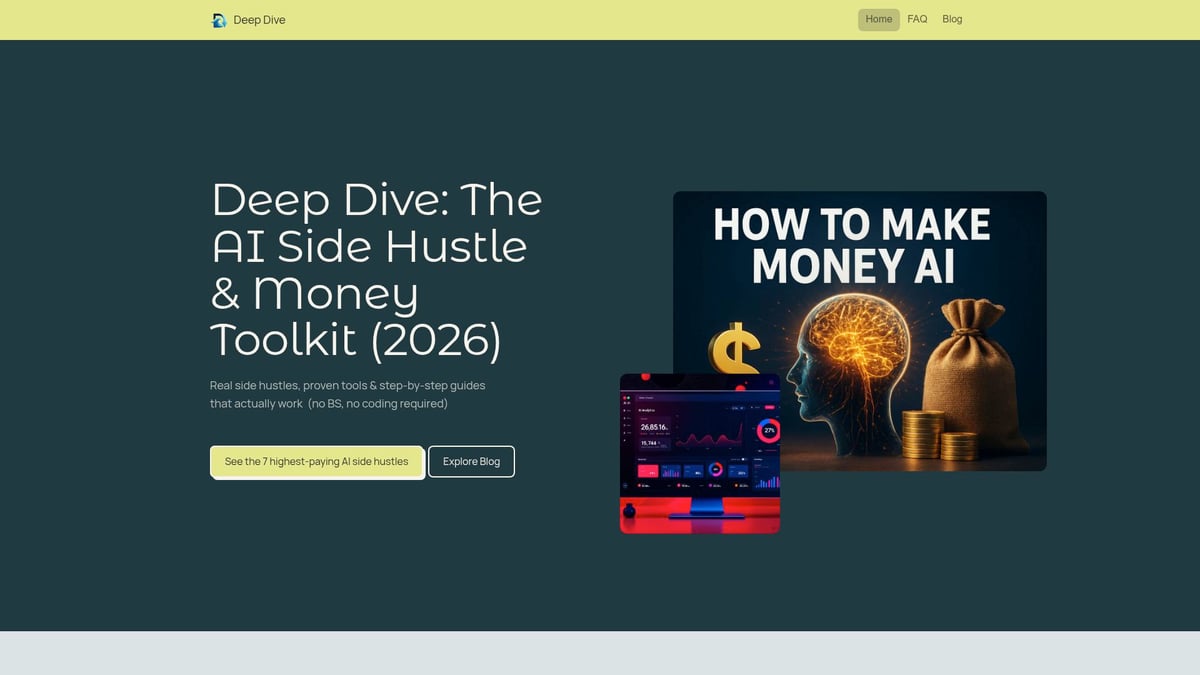
AIMoneyTools offers step-by-step guides, tool reviews, and curated resources designed for both non-technical users and entrepreneurs. Want to see real strategies in action? Check out their ChatGPT money-making strategies to discover how prompt engineering can fuel your next business idea.
Explore practical tutorials on automating blog writing, generating high-converting marketing copy, and building AI-driven solutions. Every strategy is crafted for accessibility, ensuring anyone can monetize AI skills confidently.
Ready to start? Dive into AIMoneyTools’ free resources, toolkits, and weekly newsletter to stay ahead in the world of AI monetization.
Now that you’ve seen how mastering prompt engineering can open up new opportunities for content creation, automation, and launching AI-powered side hustles, why not take the next step? If you’re ready to turn your skills into real income streams, you’ll want to keep an eye out for our upcoming toolkit. I’m excited to share that the AI Side Hustle Toolkit drop coming soon is designed to give you practical strategies, resources, and step-by-step guides—no coding required. Don’t miss out on the chance to supercharge your productivity and start building your own AI-driven business!
Are you interested in Mastering Grok Imagine: Grok Imagine let's you create stunning videos and images, check out The Ultimate Prompt Guide.