
How to Sell Custom AI Chatbots to Local Businesses (2026)
Start a profitable AI agency by selling custom AI chatbots to local businesses. Learn the ROI-focused sales strategy and tools like CustomGPT.ai.
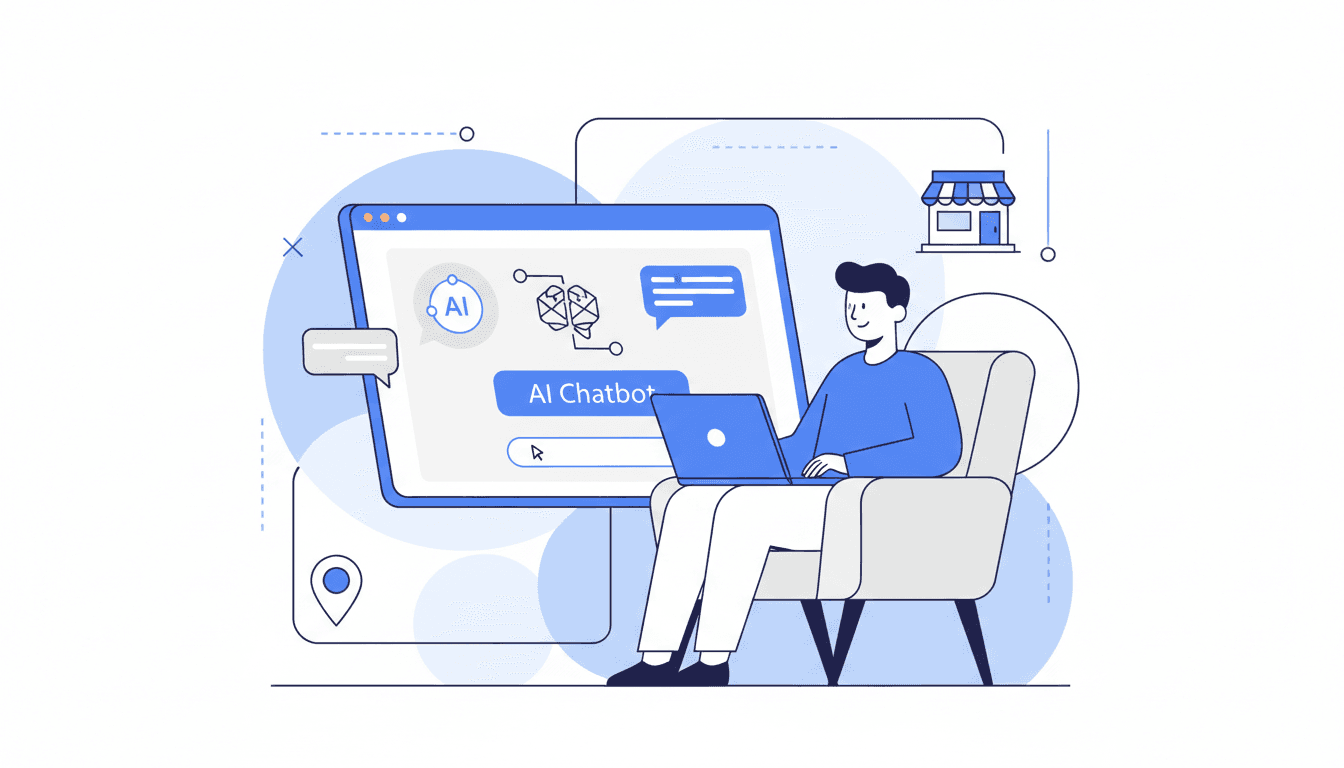
Local business owners lose significant revenue every time a customer inquiry goes unanswered. Whether it is a contractor on a job site or a medical receptionist managing a busy waiting room, missed communication leads to lost sales. You can solve this problem by providing automated assistants that capture leads and answer questions instantly.
Building these solutions no longer requires a software engineering background. By using no-code platforms, you can create a digital employee for a local law firm or HVAC company in less than an hour. This guide explains how to sell custom AI chatbots to local businesses by focusing on measurable financial results rather than technical complexity.
The Core Value: Solving the Lead Response Gap
To build a successful agency, you must shift your perspective from selling technology to selling "Lead Recovery." Most small businesses fail to respond to web inquiries within the first hour. Data from LeadConnect shows that 78% of customers buy from the company that responds to their inquiry first.
If a business relies on a traditional contact form, they are likely losing prospects to faster-moving competitors. Your service provides a 24/7 concierge that qualifies leads, answers frequent questions, and schedules appointments while the business owner is unavailable.
When pitching to a client, focus on these three outcomes:
- Immediate Response: Customers receive accurate answers in seconds, preventing them from clicking away to a competitor.
- Data-Driven Accuracy: Unlike older, scripted bots, modern assistants use the business's specific documents to provide precise information.
- Operational Efficiency: Staff members spend fewer hours answering repetitive questions about pricing or hours and more time on high-value tasks.
Choosing Your Tech Stack Without Coding
Modern AI agents utilize a process called Retrieval-Augmented Generation (RAG). This ensures the assistant only provides answers based on the specific data you provide, such as PDF manuals, website content, or service menus. This prevents the "hallucination" problem where an AI might accidentally invent fake pricing or services.
For most local agency owners, CustomGPT.ai is the most effective tool for this workflow. It allows you to sync a business’s entire website or upload internal documents to create a knowledge base instantly. CustomGPT.ai indexes your documents in under 60 seconds, allowing you to demonstrate a working prototype to a prospect during an initial meeting.
| Feature | Legacy Chatbots (Rules-based) | Custom AI (RAG-based) |
|---|---|---|
| User Interaction | Stiff, button-driven menus | Natural, human-like conversation |
| Knowledge Base | Manually programmed paths | Automatic ingestion of business docs |
| Setup Time | High (weeks of logic mapping) | Low (minutes of data syncing) |
| Accuracy | Fails if the user strays from script | High; stays within provided context |
Identifying High-Ticket Niches
Not every local business is a good candidate for this technology. A coffee shop might not see a high return on investment for a chatbot. You want to target "High Ticket, High Inquiry" industries where a single missed lead could represent thousands of dollars in revenue.
Profitable Niches for AI Agents:
- Home Services: Plumbers, roofers, and HVAC contractors who are often in the field.
- Professional Services: Personal injury lawyers, accountants, and real estate brokers.
- Healthcare: Dental practices, medical spas, and physical therapy clinics.
- Specialized Hospitality: Wedding venues and boutique hotels with complex booking questions.
According to research by Salesforce, roughly 69% of consumers prefer using chatbots for quick communication with brands. In high-stakes service industries, meeting this preference is the difference between a booked consultation and a bounced visitor.
The Step-by-Step Sales Strategy
Success in learning how to sell custom AI chatbots to local businesses depends on demonstrating immediate value. Follow this four-step sequence to land your first high-paying clients.
1. The Audit and Outreach
Instead of a standard cold call, record a short video of the prospect's current website. Highlight how difficult it is for a customer to get a quick answer to a specific question (e.g., "Do you offer emergency plumbing for tankless heaters?"). Mention that you have developed a "Digital Knowledge Assistant" that can handle these queries instantly based on their specific service list.
2. The Prototype Demonstration
This is the most critical stage of the sale. Use CustomGPT.ai to build a "lite" version of their bot by simply entering their website URL. During your presentation, let the business owner ask the assistant a complex question. When they see the tool provide an accurate, brand-aligned answer using their own data, the concept shifts from "fancy tech" to a "necessary employee."
3. Pricing for Recurring Revenue
Avoid charging hourly rates for your work. Instead, price your services based on the value of the leads captured. A standard agency pricing model includes:
- Implementation Fee: $1,000 - $3,000 (Covers data setup, custom persona instructions, and website integration).
- Monthly Management: $150 - $400 (Covers software hosting, regular knowledge updates, and monthly lead reports).
4. Overcoming Technical Concerns
The most common concern from business owners is whether the AI will "go rogue" and offer discounts or incorrect advice. Explain that the RAG architecture acts as a digital fence. If a user asks something outside the provided business data, the assistant is programmed to say, "I don't have that information yet, but let me take your number so a specialist can call you."
Implementation and Scaling Your Agency
Once you secure a client, the onboarding process is straightforward. Collect their service brochures, employee handbooks, and FAQ lists. Feed these documents into your AI builder to ensure the assistant is fully trained on their unique business operations.
Installation typically requires adding a small snippet of code to the header of the client's website. Whether they use WordPress, Shopify, or Wix, the process takes less than ten minutes.
As you gain experience, you can create industry-specific templates. For example, once you build a successful assistant for a roofing company, you can replicate that structure for other roofers in different geographic regions. This allows you to scale your agency rapidly without reinventing the workflow for every new client. If you are interested in other ways to monetize AI, consider reading our guide on /blog/ai-side-hustles-for-beginners or explore how to /blog/make-money-with-ai-video.
Maintaining Long-Term Clients
Your value to the business owner is your ability to translate new technology into profit. Provide a monthly report that shows exactly how many conversations the assistant handled and how many email addresses or phone numbers it captured.
When an owner sees that the system managed 50 inquiries while they were on-site or asleep, the service becomes an indispensable part of their business. You are no longer just a "tech person"; you are an essential partner helping them maximize their marketing spend.
Frequently Asked Questions
Do I need to know how to code to sell AI chatbots?
No. Tools like CustomGPT.ai use "no-code" interfaces. You simply upload documents or sync a website URL, and the platform handles the underlying AI architecture. Your job is to curate the data and manage the client relationship.
How much can I charge for a custom chatbot?
Most agencies charge a setup fee between $1,000 and $2,500, plus a monthly maintenance fee of $150 to $300. In high-value niches like law or luxury real estate, setup fees can be significantly higher based on the complexity of the data.
Will the chatbot give out incorrect information?
When using RAG (Retrieval-Augmented Generation), the AI is restricted to the information in the documents you provide. This significantly reduces the risk of incorrect answers, as the AI is instructed to only answer based on its specific knowledge base.
How do I find my first client for an AI agency?
Start with local businesses that have high-traffic websites but slow response times. Home service providers (plumbers, HVAC) and professional services (lawyers, dentists) are the best targets because their leads have a high monetary value.
Can I build a chatbot for a business without their help?
You can build a prototype using their public website data to show them the potential. However, for a production-ready version, you will need their internal documents, pricing sheets, and specific FAQs to ensure the assistant is fully accurate.

Alex the Engineer
•Founder & AI ArchitectSenior software engineer turned AI Agency owner. I build massive, scalable AI workflows and share the exact blueprints, financial models, and code I use to generate automated revenue in 2026.
Related Guides
AI Automation Agency: Build a $25k MRR AAA in 2026
Launch a profitable AI Automation Agency. Learn to scale to $25,000 MRR using n8n workflows and CustomGPT to solve high-value business problems.
How to Grow on X: Building an Audience in 2026
Master the X algorithm with practical strategies for posting frequency, native video, and profile optimization to build a real following.