
What Is GEO (Generative Engine Optimization)? The 2026 Guide
GEO is the practice of optimizing your content so AI tools like ChatGPT, Claude, and Perplexity cite and recommend it. Here's exactly how it works — and why it's not replacing SEO.
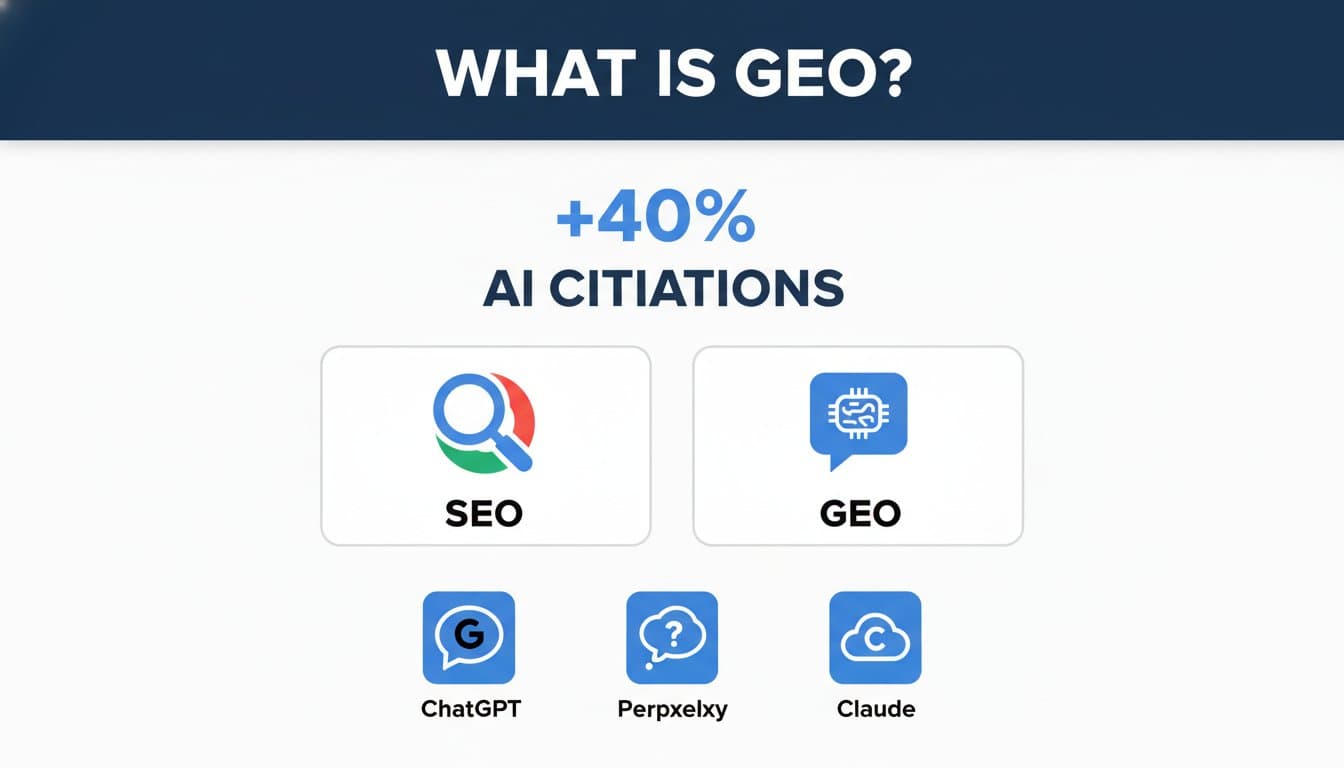
Search isn't just Google anymore. When someone asks ChatGPT "what's the best AI voice tool for YouTube?", there's no Google algorithm deciding what ranks. ChatGPT picks sources it trusts, pulls from them, and presents an answer. That's Generative Engine Optimization (GEO) in a sentence — getting your content into those answers.
But here's what makes GEO real, not just buzzword hype: ChatGPT recently spent $600,000 to hire a dedicated SEO expert. Claude is currently offering $320,000 for a Senior SEO Lead. These are AI companies — the very platforms that run generative search — and they're hiring SEOs aggressively. Why? Because they want their own content to rank in traditional search engines. The discipline of optimizing for AI citation is real enough that AI companies are investing heavily in it.
This guide breaks down what GEO is, how it's different from SEO, and five tactics that actually work in 2026.
What Is GEO?
Generative Engine Optimization (GEO) is the practice of structuring and positioning content so that AI-powered answer engines — like ChatGPT, Perplexity, Claude, and Google's AI Overviews — cite your content when answering user questions.
Traditional SEO gets you a blue link on a results page. GEO gets your content used as the source inside an AI-generated answer. Instead of ranking #4 in a list, your article becomes the explanation, the definition, or the recommendation that the AI delivers directly to the user.
The term was formalized in a 2023 paper from Princeton, Georgia Tech, and IIT Delhi, which found that specific writing techniques could increase AI citation rates by up to 40%.
GEO vs SEO: Not Either/Or
A lot of content around GEO frames it as "SEO is dead." That's wrong. They're different disciplines targeting different surfaces — and the smartest content operations run both.
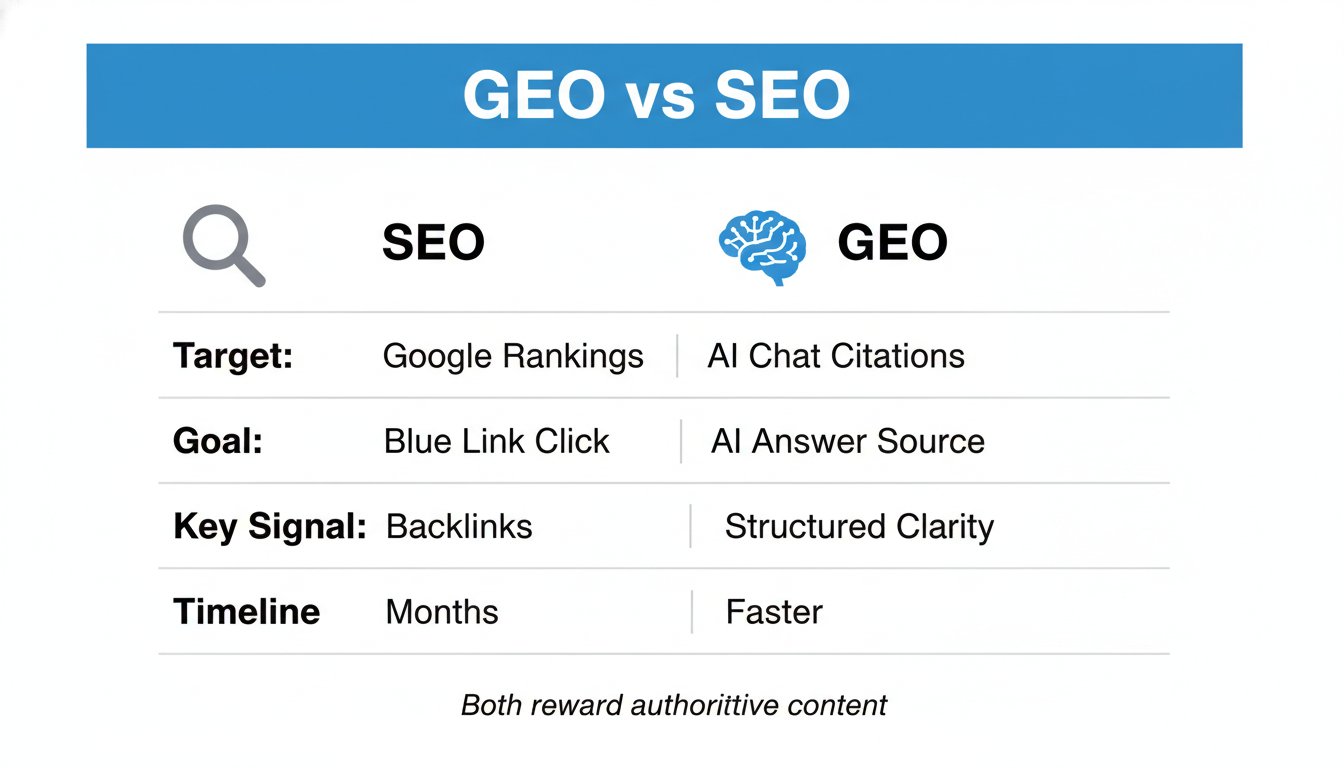
| SEO | GEO | |
|---|---|---|
| Target | Google / Bing rankings | AI chatbot citations |
| Success metric | Click-through rate, position | Citation rate, brand mention in AI answers |
| Key signals | Backlinks, E-E-A-T, CTR | Clarity, authority, structured answers, citations |
| Format preference | Long-form with depth | Concise, factual, definition-first |
| Timeline | Weeks to months | Faster for new AI crawls |
The overlap is real: both reward authoritative, well-structured content. Many GEO tactics improve SEO too — particularly FAQ sections, cited statistics, and clear definitions.
How Generative Engines Decide What to Cite
AI answer engines don't rank pages like Google does. They evaluate whether a piece of content is the best answer to a specific question. The key factors that influence citation:
1. Direct answer placement. AI tools favor content that answers the question clearly in the first 50–100 words. If your article buries the definition in paragraph five, it loses to the one that leads with it.
2. Cited statistics and sourced claims. According to the Princeton/Georgia Tech GEO study, content that includes statistics with citations gets cited by generative engines at significantly higher rates. "About 70% of marketers report…" with a source link outperforms "many marketers report…".
3. FAQ structure. Perplexity, ChatGPT, and Google AI Overviews frequently pull from FAQ sections because they're formatted as direct question-answer pairs — exactly the structure AI needs to generate responses.
4. Topical authority signals. When your site has multiple pieces of content covering a topic from different angles — what it is, how to do it, comparisons, use cases — AI tools recognize that as depth. A single article rarely gets cited consistently; a cluster of five related articles does.
5. Brand and name consistency. AI models learn associations. Consistent use of your brand name, product names, and author bylines across multiple articles trains models to recognize you as a source.
5 GEO Tactics That Work in 2026
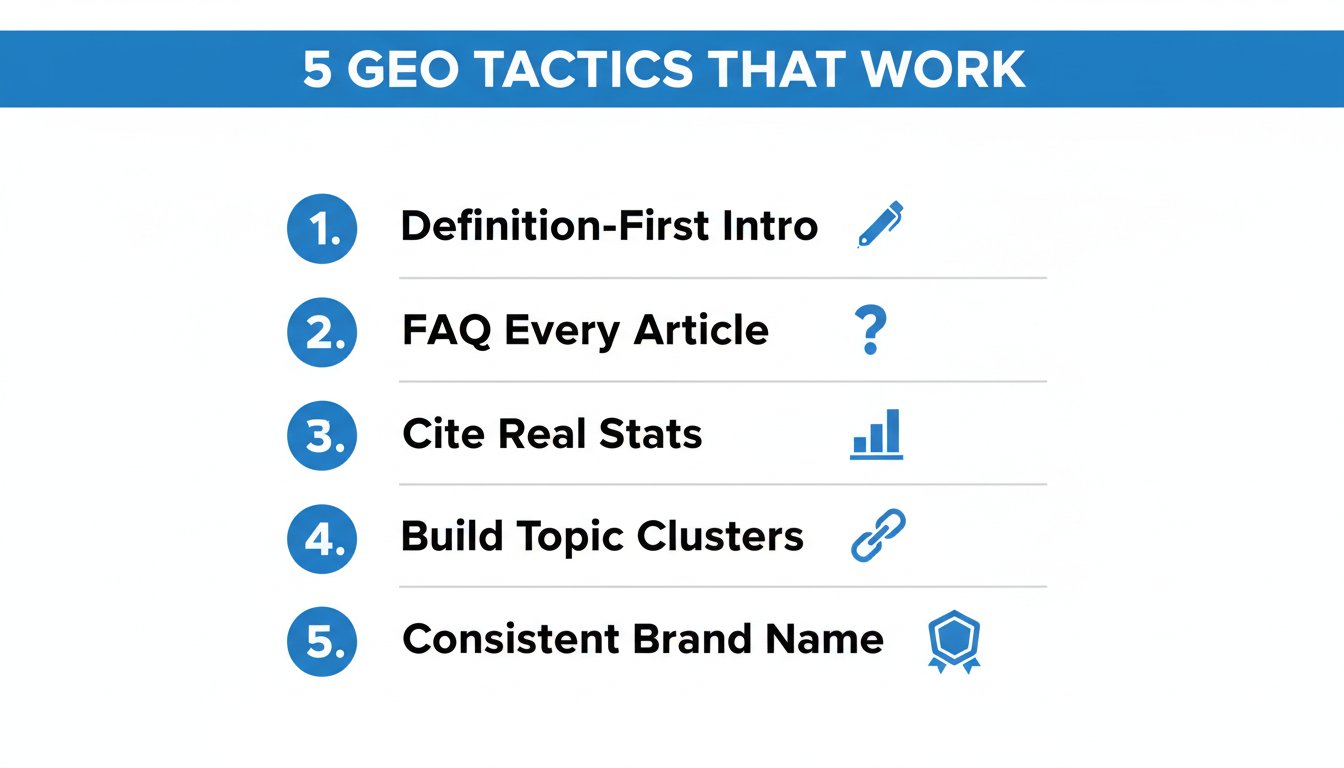
1. Write definition-first introductions. Start every article with a clear, quotable definition of the core term. One or two sentences that could stand alone as an answer. This format is optimized for AI extraction.
2. Add a FAQ section to every article. Target the specific questions people ask ChatGPT about your topic. Use tools like AlsoAsked or AnswerThePublic to find real question variations, then answer each one in 2–4 sentences. This directly serves both AEO (Answer Engine Optimization) and GEO.
3. Cite real statistics with sources. Replace vague claims with specific, cited figures. "AI adoption grew 34% year-over-year according to McKinsey's 2025 State of AI report" is citation-worthy. "AI adoption is growing fast" is not.
4. Build topical clusters, not isolated articles. For any topic you want to own in AI answers, publish a hub article (broad overview) plus four to six spoke articles (specific angles). Internal links between them signal to AI crawlers that you have comprehensive coverage, not one-off content.
5. Structure content for scanning. Use clear H2 and H3 headings that are themselves answerable questions ("How does GEO work?" rather than "Overview"). AI tools parse headings to map content structure — descriptive headers help them identify which section answers which question.
Who Should Actually Care About GEO
If your content strategy depends on search traffic, you should be thinking about GEO now — not when AI search is dominant.
That said, GEO priority varies by content type:
- Definition and glossary articles have the highest GEO value. When someone asks ChatGPT "what is generative engine optimization," it will cite a source. Make sure that source is yours.
- Comparison articles get heavy AI citation when users ask "what's the difference between X and Y."
- How-to guides are frequently pulled for step-by-step answers.
- Pure news or opinion has low GEO value — AI tools prefer factual, referenceable content.
For content creators and bloggers, one practical GEO move right now: if you build a structured knowledge base around your niche using a tool like CustomGPT, your content becomes organized, crawlable, and structured in a format that AI tools recognize as authoritative — the content equivalent of schema markup for AI search.
GEO and the March 2026 Algorithm Reality
Google released both a Core Update and a Spam Update in March 2026. These updates targeted thin AI-generated content, keyword stuffing, and unnatural affiliate patterns. At the same time, Google's AI Overviews have continued pulling citations directly from indexed content — meaning the same article can feed both GEO (AI answers) and SEO (traditional rankings) if it's built right.
The February 2026 wave of traffic drops across AI-focused sites was largely traced back to pure auto-generated content that never had human oversight. The lesson: GEO isn't about producing more content with AI, it's about producing better content, with AI as an assist.
For more on how AI tools connect to earning money online, see our guides on AI side hustle ideas and AI automation agency setup.
Key Takeaways
- GEO = optimizing content to be cited by AI tools like ChatGPT, Claude, and Perplexity
- It's not replacing SEO — the two are complementary, targeting different surfaces
- AI engines favor: clear definitions, cited statistics, FAQ structure, topical authority
- The biggest GEO opportunity right now: glossary and definition articles in your niche
- ChatGPT and Claude are both investing in SEO/GEO talent — the discipline is real
Frequently Asked Questions
What does GEO stand for? GEO stands for Generative Engine Optimization — the practice of optimizing content so that AI-powered search tools like ChatGPT, Perplexity, and Google AI Overviews cite your content in their responses.
Is GEO the same as SEO? No. SEO targets traditional search engine rankings (Google blue links). GEO targets AI-generated answers and citations. They use similar quality signals but different optimization tactics — and you should be doing both.
How long does GEO take to show results? Faster than traditional SEO in some cases. AI tools crawl and update their knowledge bases regularly, and well-structured content can start appearing in AI citations within weeks rather than months.
What types of content perform best for GEO? Definition articles, FAQ sections, comparison guides, and data-cited how-to content perform best. Vague opinion pieces and thin AI-generated content perform worst.
Do backlinks matter for GEO? Less than for traditional SEO. AI tools weight content clarity, factual accuracy, and structural signals more heavily than link counts. That said, authoritative domains with strong backlink profiles do tend to get cited more — the two aren't completely unrelated.
Does GEO work for small websites? Yes. AI citation is more merit-based than link-based, which levels the playing field for smaller sites with genuinely useful content. A well-written definition article on a low-DA site can outperform a thin overview on a high-DA site in AI search results.

Alex the Engineer
•Founder & AI ArchitectSenior software engineer turned AI Agency owner. I build massive, scalable AI workflows and share the exact blueprints, financial models, and code I use to generate automated revenue in 2026.
Related Articles

AI Automation Agency: Build a $25k MRR AAA in 2026
Launch a profitable AI Automation Agency. Learn to scale to $25,000 MRR using n8n workflows and CustomGPT to solve high-value business problems.
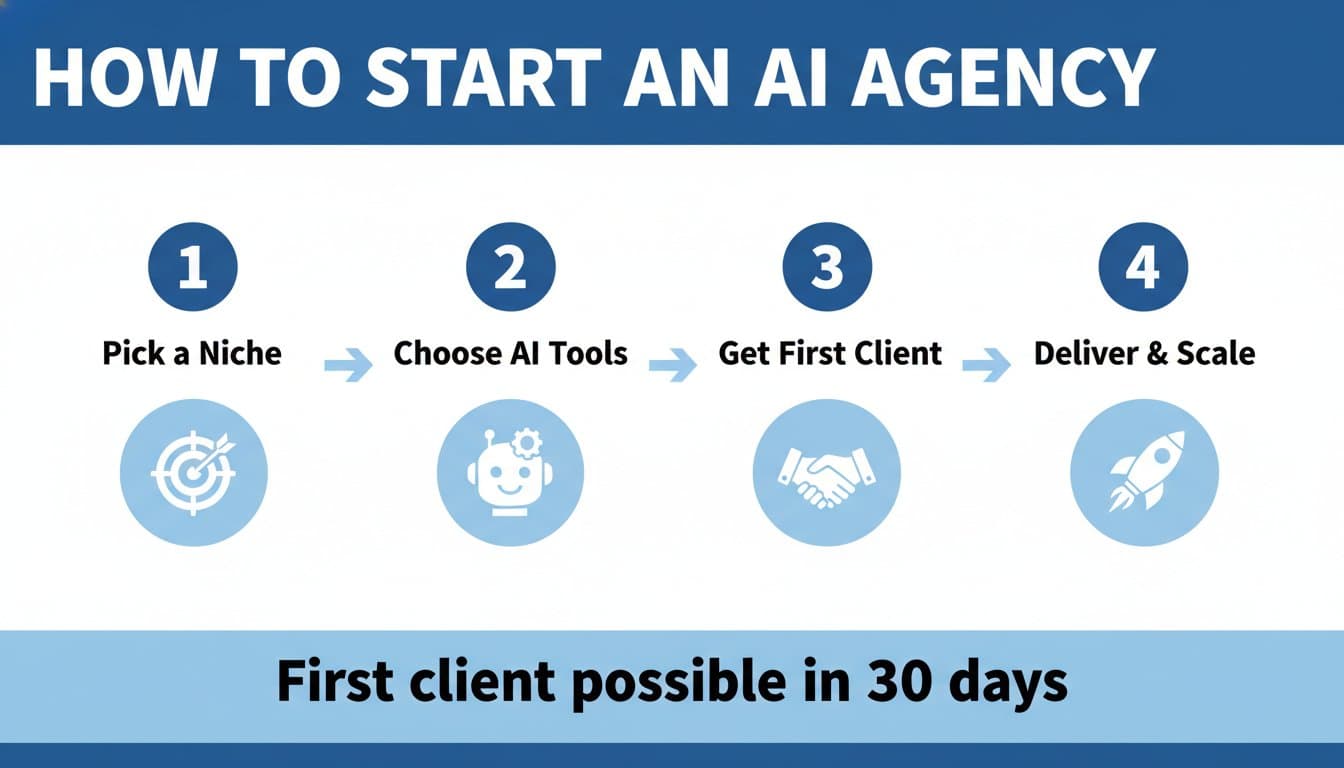
How to Start an AI Agency in 2026: The Practical Step-by-Step Guide
Learn how to start an AI agency from scratch in 2026. Discover the exact services to offer, how to find your first clients, and the tools that make delivery fast and profitable.