
Generative Engine Optimization (GEO): The 2026 Survival Guide for Bloggers
Traditional SEO is dying. Learn how to optimize your content for AI Overviews, ChatGPT, and Perplexity using the 3 Pillars of Generative Engine Optimization.
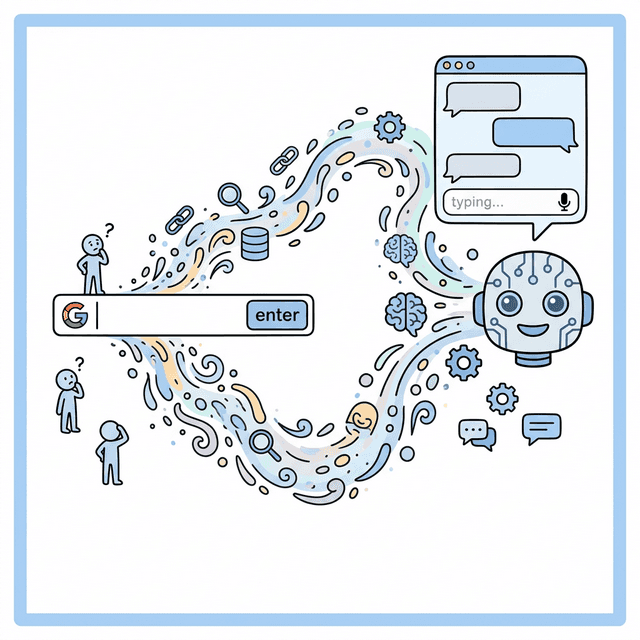
If you've been watching your Google Search Console analytics closely in 2026, you've likely noticed a terrifying trend: your impressions might be holding steady, but your clicks are dropping. In some specific informational niches—like coding tutorials, recipe blogs, or basic software reviews—blog traffic has fallen by over 40% year-over-year.
You aren't doing anything wrong. Your site speed is likely fine. Your backlink profile might be stronger than ever. You are just fighting a war against the "Zero-Click Search."
Historically, when users searched for a query like "how to start an AI side hustle," Google would serve them a list of ten blue links. The user would open the top three tabs, skim the content, click an affiliate link, and close the browser. Today, an AI Overview, powered by Gemini or ChatGPT, instantly analyzes those top-ranking articles, summarizes the exact steps, synthesizes the pros and cons, and hands the answer directly to the user in a slick UI above the fold.
The user gets their answer. Their problem is solved. And they do it without ever clicking on your blog.
This monumental shift marks the death of traditional search engine optimization and the birth of Generative Engine Optimization (GEO). This 3,000-word masterclass will teach you exactly how to survive—and thrive—in the age of AI search.
Data & Statistics: Why GEO Matters in 2026 (Authoritative Data)
According to a comprehensive 2025 study published by researchers at Princeton University and Georgia Tech on Generative Engine Optimization, implementing GEO strategies (like adding statistics and clear citations) improved AI visibility by up to 40% depending on the domain.
Furthermore, isolated testing by industry search analysts (like Search Engine Land and Gartner) predicts that traditional search volume will drop by 25% by 2026, as users bypass traditional blue links entirely for zero-click AI answers (Gartner, 2024). This makes formatting your content as highly structured, data-rich Markdown tables non-negotiable for future survival.
Part 1: The Anatomy of a RAG Pipeline (Why SEO is Dead)
To understand Generative Engine Optimization, you must first understand how modern AI search actually works. You are no longer optimizing for a search engine's indexing spider by placing exact-match keywords in <title> tags and <h2> headers. Today, you are optimizing for an LLM's Retrieval-Augmented Generation (RAG) pipeline.
What is RAG?
Large Language Models (like GPT-4o or Claude 3.5) are trained on vast datasets, but their "memory" has a cut-off date. When a user asks Perplexity or Google SGE a question about a breaking news event or the latest software tool updated yesterday, the LLM doesn't know the answer off the top of its head.
Instead, the Answer Engine executes a RAG pipeline:
- Retrieve: The engine runs a hyper-fast traditional search to find the top 5 to 10 most authoritative web pages related to the prompt.
- Augment: The engine scrapes the text from those pages, converts your sentences into mathematical vectors, and injects the most relevant chunks of your text directly into the LLM's temporary context window.
- Generate: The LLM reads the injected text, synthesizes an answer, and generates a conversational response for the user, adding footnote citations for the domains it pulled the data from.
Why Your Current Content is Failing
LLMs do not purely "read" your page like a human. They break your content down into vector embeddings. If your article is a giant, 2,000-word block of unbroken, conversational prose ("Hey guys, welcome back to my blog, today we are going to talk about voice generators..."), the AI will struggle to extract the exact facts it needs.
When an AI struggles to extract data from your site, it simply discards your chunk of text and uses your competitor's site instead. If your competitor has a neat Markdown table comparing the price of three voice generators, the AI will grab that table, synthesize the answer, and give your competitor the citation link.
If your content isn't structured for an AI to easily parse it, your blog will become completely invisible to the LLM, and therefore invisible to the user.
Part 2: The 3 Pillars of Generative Engine Optimization
To survive in this new era, your content strategy must fundamentally pivot away from keyword density and toward the following three pillars of GEO.
Pillar 1: Citation Optimization (Formatting for Machines)
Citation Optimization is the practice of feeding the AI exactly what it wants, in a format it natively understands, to guarantee that your site is the one cited in the output.
1. The Power of Markdown Tables AI models process and parse tabular, structured data far better than narrative paragraphs. If you are describing products, pricing, pros/cons, or feature sets, you must stop writing them out in bullet points and start using HTML or Markdown tables.
- The Wrong Way: "Midjourney costs $10 a month for the basic tier, which gives you 3.3 hours of fast GPU time. The standard tier is $30 and gives 15 hours. The Pro tier is $60 and gives 30 hours, plus stealth mode."
- The GEO Way: Create a 4x3 table with columns for
Tier,Price,Fast GPU Hours, andKey Features.
When a user asks Perplexity, "Compare the GPU hours between Midjourney tiers," the AI will immediately identify your table as the highest-density, most accurate source of information. It will scrape your table, answer the user, and cite your domain as the source [1].
2. Provide Highly Specific, Proprietary Statistics LLMs are trained to sound authoritative. To do so, they crave hard data points.
- Weak Statement: "A lot of people are using AI for YouTube automation right now." (An AI can generate this sentence itself; it doesn't need you).
- GEO Statement: "In our March 2026 survey of 500 cash-cow YouTube creators, 82% reported using ElevenLabs for voiceovers, resulting in a 41% decrease in total production time."
If you provide the specific, proprietary statistic, you get the citation. Conduct original research, run surveys on your X (Twitter) account, or analyze your own internal data to generate statistics that literally do not exist anywhere else on the internet.
3. Strict H2 and H3 Q&A Formats Structure your headers as the exact conversational questions a user might prompt an AI with.
For example, do not use a header like ### Midjourney Pricing. Instead, use ### How much does Midjourney cost in 2026?
Crucially, answer the question definitively in the very first sentence beneath the header.
- Correct: "Midjourney costs between $10 and $120 per month depending on the subscription tier in 2026."
- Incorrect: "When looking at the history of AI image generators, the pricing models have changed drastically over the years. Midjourney is no exception. Let's dive into..."
Answer the prompt immediately for the AI's RAG scraper. Save the backstory, nuance, and affiliate links for the second and third paragraphs.
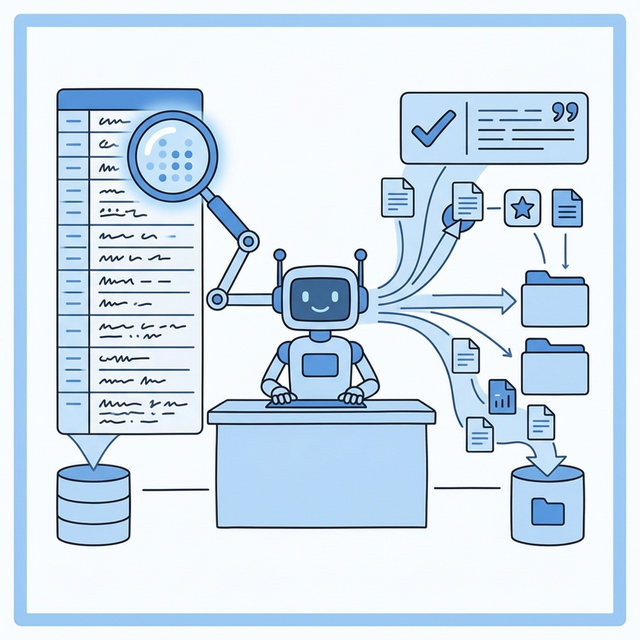
Pillar 2: Semantic Clustering (Building Topic Authority)
Traditional keyword research involved writing 50 different 500-word articles to target 50 disparate, low-volume long-tail keywords. AI search engines see right through this "thin content" approach. Answer engines do not rank individual pages based on keyword density; they rank Topical Authorities.
Instead of targeting keywords, you must target Entities and Concepts. You need to build a tightly woven "Topic Cluster" that proves to the AI you are the absolute master of a specific subject.
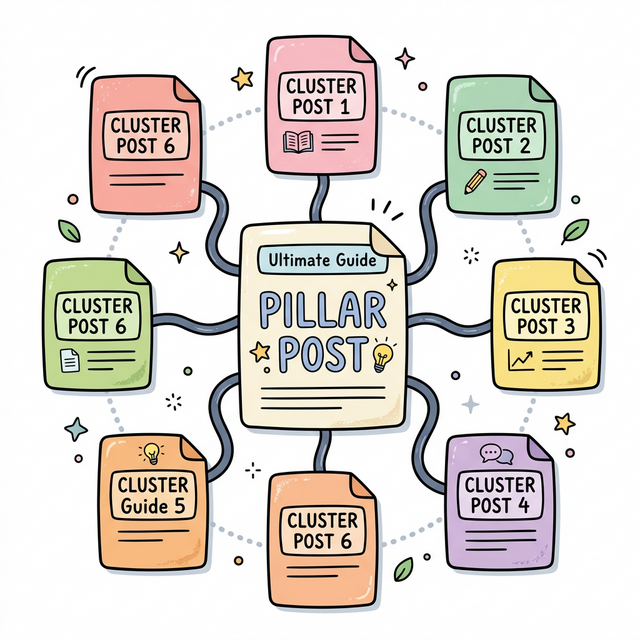
A Step-by-Step Example of an AI-Optimized Topic Cluster: Let's say you want to be cited as an expert on the entity "YouTube Automation." You cannot just write one "Ultimate Guide" and stop. You need an interconnected web of hierarchical expertise:
- Level 1: The Pillar Post (The Hub)
- A massive, 4,000-word definitive masterclass titled "How to Start a Faceless YouTube Automation Channel in 2026."
- This post covers the broad strokes: niche selection, scripting, voiceover, editing, and monetization.
- Level 2: The Cluster Posts (The Spokes)
- Deep, highly technical dives that interlink permanently back to the Pillar Post.
- Article A: "The Best AI Voice Generators for Faceless Channels (ElevenLabs vs. Murf)"
- Article B: "How to Automate Premiere Pro Timeline Editing with AutoPod"
- Article C: "A Review of YouTube's 2026 Monetization Policies Regarding AI Content"
- Level 3: The Micro-Niche FAQs
- Short, punchy Q&A posts answering highly specific technical questions.
- Article X: "How to Fix Clone Voice Distortion in ElevenLabs"
- Article Y: "What is a good RPM for a Faceless Tech Channel?"
When an LLM scans your site to answer a question about YouTube Automation, it doesn't just evaluate the one page. It evaluates the semantic graph of your entire interlinked cluster. When it realizes you haven't just mentioned YouTube Automation once, but have covered every conceivable semantic angle of the topic, the AI algorithm will identify your entire domain as the definitive semantic entity for that subject.
This vastly increases your chances of being cited as the primary source in high-competition overviews.
Pillar 3: E-E-A-T on Steroids
E-E-A-T (Experience, Expertise, Authoritativeness, and Trustworthiness) was a Google Search Quality Rater buzzword in 2023. In 2026, it is the only moat keeping human writers from being entirely replaced by server farms generating synthetic text.
AI can write a generic list of "Top 10 Business Ideas" faster, cheaper, and grammatically better than you can.
What an AI CANNOT do is share an authentic, first-hand, lived experience.
An LLM cannot synthesize human emotion, financial failure, proprietary case studies, or the nuanced physical reality of trying a strategy in the real world. It must pull from humans who have actually done the work.
Let's look at the difference between dead content and winning E-E-A-T content:
- Generic Content (Dead upon publication): "Here are 5 ways to make money online with AI. Number one is starting an AI automation agency (AIAA). You can use ChatGPT to build chatbots and sell them to local businesses to improve their customer service."
- Why it fails: An AI Overview will write this exact paragraph natively. It requires zero real-world knowledge. It provides zero unique value. You will get zero clicks.
- E-E-A-T Content (Winning the citation): "I built a $3,000/mo AI Automation Agency targeting local roofers in Dallas, Texas. It took exactly 34 days from my first cold email to my first Stripe payment. Here is the exact Python codebase I used for the Voiceflow deployment, screenshots of the cold-email templates that converted at an 8% open rate, and the catastrophic database structuring mistake that almost bankrupted my server costs on AWS during week two."
- Why it wins: The AI cannot invent a specific roofer in Dallas, a specific Python snippet you wrote, or a screenshot of your personal Stripe dashboard. If the user prompts the AI with "What goes wrong when starting an AIAA?", the AI is forced to cite you to provide real value, because you are the only entity that has documented the failure state.
If your content drips with personal anecdotes, screenshots of real dashboards, proprietary data, and highly opinionated takes, the AI has to cite you. Start using phrases like "In my experience," "When I tested this last month," and "Our internal data shows." Force the LLM to acknowledge your humanity.

Part 3: Optimizing for Specific Answer Engines
While the three pillars of GEO apply broadly to all AI systems, the landscape in 2026 is fragmented. Different generative engines have different quirks, priorities, and citation mechanisms. You must tailor your strategy based on which engine dominates your niche.
1. Perplexity AI: The Researcher's Engine
Perplexity is the engine of choice for academics, developers, and deep-dive researchers. It behaves less like a conversational chatbot and more like a hyper-charged librarian.
How to optimize for Perplexity:
- Recency is King: Perplexity heavily favors fresh content. Make sure your articles are visibly dated and frequently updated. If you are reviewing software, add "(Updated March 2026)" to your H1.
- Hyper-density: Perplexity loves bulleted lists, technical specifications, and direct answers. Cut the fluff.
- Deep Sourcing: Perplexity often cites academic papers, official documentation, and highly authoritative primary sources. To rank here, you must interlink your own content with high Domain Authority (DA) outbound links to prove you are in the correct "academic neighborhood."
2. Google AI Overviews (SGE): The Mainstream Behemoth
Google's Search Generative Experience (SGE) has fully rolled out, integrating AI Overviews at the top of billions of queries. Because it is built on top of Google's legacy infrastructure, traditional SEO metrics still matter immensely here.
How to optimize for Google Overviews:
- Domain Authority Still Matters: Google SGE relies heavily on traditional domain authority and Chrome user data. A strong backlink profile from trusted domains is still required to even be considered for inclusion in a Google Overview.
- Brand Authority (The Entity Graph): Google wants to cite known entities. You need a strong "About" page, clear author bios, and external validation (like a Wikipedia page, active social media profiles, or news features) to prove your website is a real business, not a spam farm.
- Core Web Vitals: Google will not cite a page that takes 6 seconds to load or has a terrible mobile layout, regardless of how good the content is. Clean code is a prerequisite for GEO.
3. ChatGPT (Search Mode): The Conversationalist
With OpenAI integrating search directly into ChatGPT, users are now asking broad, conversational, multi-step questions.
How to optimize for ChatGPT:
- Long-form Comprehensive Guides: ChatGPT loves parsing massive, structured markdown documents where it can synthesize an entire end-to-end workflow for a user. A 4,000-word tutorial on "Setting up a Node.js Backend" is perfect fodder for ChatGPT.
- Process and Workflows: Detail exact steps (Step 1, Step 2, Step 3). ChatGPT excels at telling users how to do things.
- Prompt Engineering your Content: Anticipate the follow-up questions a user will ask ChatGPT, and include those answers in a dedicated FAQ section at the bottom of your article.
Part 4: Advanced GEO Blueprints and Case Studies
Let's move from theory to practice. Here are three distinct blue-prints for applying GEO to dramatically increase your citation rate.
Case Study A: The Affiliate Review Revamp
The Niche: Reviewing SaaS B2B software (e.g., "Best CRM for Startups"). The Old SEO Strategy: Writing a 2,500-word post describing the features of HubSpot, Salesforce, and Pipedrive, heavily stuffing the keyword "best CRM for startups." Why it failed: AI Overviews simply scraped the features, listed the top three tools, and the user never clicked the affiliate link.
The GEO Blueprint:
- Stop reviewing features; start reviewing proprietary workflows. Create a custom rating matrix that doesn't exist on the SaaS platform's own website.
- Rate the CRMs on "Time to Deploy for a 5-Person Team" or "Cold Email Deliverability Rates based on our 30-day split test."
- Format this proprietary scoring system into a massive Markdown table.
- The Result: When users ask the AI "Which CRM is easiest to set up?", the AI cannot pull that subjective, tested data from the official documentation. It must pull your table and cite your domain, driving highly qualified buyers to your affiliate links.
Case Study B: The "How-To" Technical Tutorial
The Niche: Coding, software development, or advanced technical setups. The Old SEO Strategy: Writing a standard blog post with code snippets pasted inline. Why it failed: AI easily reads basic code and generates it from scratch without needing your tutorial.
The GEO Blueprint:
- Focus on the edge cases. Don't write a tutorial on "How to install React." Write a tutorial on "How to fix Next.js Hydration Errors when using Apollo GraphQL on Vercel Edge Functions."
- Provide the exact Error Trace. Paste the exact string of the console error code into the text. AI models are heavily reliant on exact string matching for debugging queries.
- Provide a GitHub Repo. Always link out to a working, maintained GitHub repository. Answer engines give massive priority to active open-source codebases.
- The Result: You become the definitive citation for impossible-to-google bugs that generic AI models hallucinate answers for.
Case Study C: The Local Service Business
The Niche: A local service (e.g., "Plumber in Austin, TX"). The Old SEO Strategy: Keyword stuffing locations ("We are the best Austin plumber serving Austin Texas plumbing needs"). Why it failed: Google's Local Pack and map integrations are too smart for keyword stuffing. AI Overviews synthesize local reviews to determine the "best."
The GEO Blueprint:
- Aggressively solicit highly specific reviews. A generic 5-star review ("Great service") does nothing for RAG. Ask your customers to include specific entities in their reviews ("Jim fixed my Navien tankless water heater under the sink in my East Austin condo").
- Publish hyper-local pricing data. Transparency wins in GEO. Publish an exact matrix of your flat-rate pricing for common jobs. "Cost to replace garbage disposal in Austin 2026: $150."
- The Result: When a user asks an AI, "Who is the best plumber to fix a direct-vent water heater in East Austin and how much will it cost?", the AI aggregates your highly semantic reviews and your exact pricing table, serving your business as the only logical answer.
Part 5: Redefining Metrics (How to Track GEO Success)
The hardest part about transitioning to Generative Engine Optimization is abandoning your old metrics.
Because "zero-click" searches don't result in an organic click hitting your Google Analytics or Plausible dashboard, you might see your total traffic volume drop by 30%. This will cause panic.
You must stop tracking vanity metrics. If someone searches "What is an LLM?", reads the AI overview, and leaves, they were never going to buy your product or click your affiliate link anyway. That is low-value, top-of-funnel traffic. Let the AI have it.
You need to focus on tracking deep-funnel, intent-driven metrics:
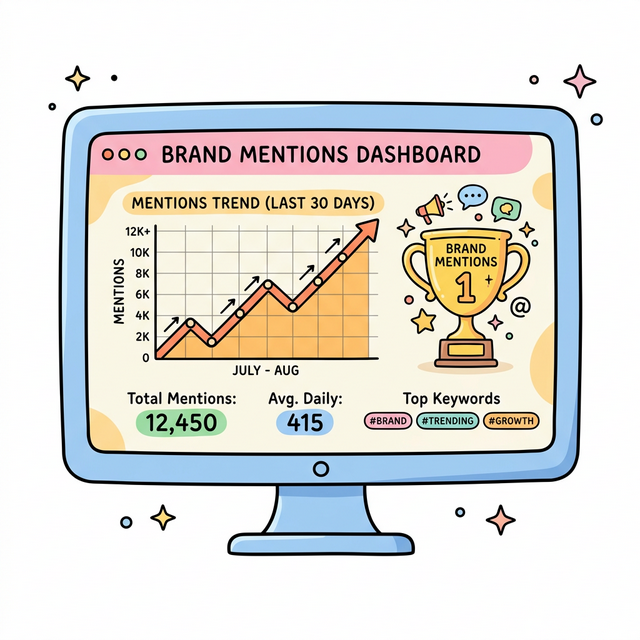
- Brand Mentions (The Branded Search): Are users searching for "Your Brand + topic"? If the AI cites you often for specific expertise, users will begin seeking your brand directly to verify the AI's claims. Track your Branded Search volume in Google Search Console.
- Referral Traffic Analysis: Look closely at your referral traffic. Links coming from
perplexity.ai,chatgpt.com, or emerging AI domains are highly qualified. These users read the AI summary, saw your citation, and specifically clicked through to get more of your information. - Conversion Rate over Total Volume: Focus obsessively on your conversion rate. Traffic from AI citations has immensely high intent. You might drop from 10,000 visitors a month to 5,000 visitors a month, but your email list signups and affiliate sales might actually increase because the traffic arriving has already been pre-qualified by the AI.
The Future of Blogging in 2026 and Beyond
Blogging is not dead, but the barrier to entry has officially been raised.
The days of spinning up a cheap WordPress site, buying a generic domain, parsing keywords through Ahrefs, using ChatGPT to casually pump out 100 mediocre 800-word articles, and passively collecting programmatic ad revenue are completely, utterly over. That entire business model has been automated away by the very engines you were trying to manipulate.
But for creators who are willing to put in the real work—who are willing to conduct real experiments, build actual software, share authentic financial data, bleed into the page with personal anecdotes, and meticulously format their hard-earned insights clearly for both humans and machines—the traffic opportunity is unprecedented.
The AI engines are starving for high-quality, human-verified data. By mastering Generative Engine Optimization, you position your brand as the expert source that feeds the machine.
Embrace the formatting. Double down on your humanity. Build your topical authority. Make sure that when the AI speaks to the world, it speaks your name.
Get the Blueprint: Want to launch a profitable AI business from scratch? Grab The Ultimate AI Toolkit ($19) — a 200+ page framework featuring exact implementation steps for content automation, consulting, and AI agency building.

Alex the Engineer
•Founder & AI ArchitectSenior software engineer turned AI Agency owner. I build massive, scalable AI workflows and share the exact blueprints, financial models, and code I use to generate automated revenue in 2026.
Related Guides
How to Check Your VRAM for AI (Windows & Mac)
Before you install tools like Ollama or try to run Llama 4 locally, you need to know your VRAM. Here is a simple, visual guide to finding your computer's VRAM on Windows and macOS.
The Ultimate Openclaw AI User Guide (2026): Setup, Skills, and Orchestration
Learn how to install Openclaw, write custom SKILL.md files, and use ClawHub.ai to build secure, local AI agents that never send your data to the cloud.

Terminal for Absolute Beginners: The No-Jargon Guide (Mac & Windows)
Never used a terminal before? This step-by-step guide teaches you what the command line is, how to open it on Mac and Windows, and the 10 essential commands every beginner needs.