
5 AI Side Hustles That Are Actually Working in 2026 (Zero-Click Proof)
In 2026, AI is doing the easy work for free. To make money, you need to launch a 'Zero-Click Proof' AI side hustle that cannot be bypassed by a chatbot.
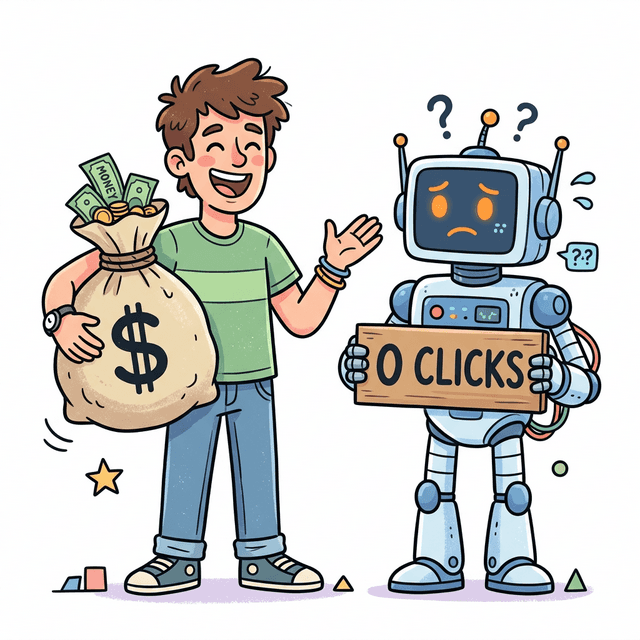
The landscape of making money online has radically, violently shifted in the last 24 months.
If you started an AI side hustle in 2023, you were participating in a gold rush. The barrier to entry was practically non-existent. You probably did something delightfully simple: you used ChatGPT to write freelance SEO articles on Upwork, you generated Midjourney stock photos to sell on Adobe Stock dropshipping accounts, or you offered generic "AI consulting" to small businesses by showing them how to write marketing emails.
In 2026, those specific "low-friction" businesses are completely, utterly dead.
Why? Because the native generative AI systems deeply embedded inside Google Workspace, Apple iOS, and Microsoft Office can now do all of that for free, instantly, without the user ever leaving their current tab. If your business model relied on being a "middleman" between a human client and a Large Language Model (LLM), you have been automated out of existence.
To succeed today, you must build a Zero-Click Proof side hustle.
This means building a highly defensible business that requires physical hardware integrations, hyper-niche proprietary data, complex outward-bound orchestration, or localized, relationship-based sales. These are the models that an Answer Engine like Perplexity or ChatGPT cannot simply "generate" in a chat query.
In this definitive, 3,000-word blueprint, we will break down the top 5 highly profitable AI side hustles actually working in 2026. We will cover the exact tech stacks required, the "Day 1 to Client 1" execution paths, and precisely how to price your services.
1. Multi-Agent B2B Outbound Automation
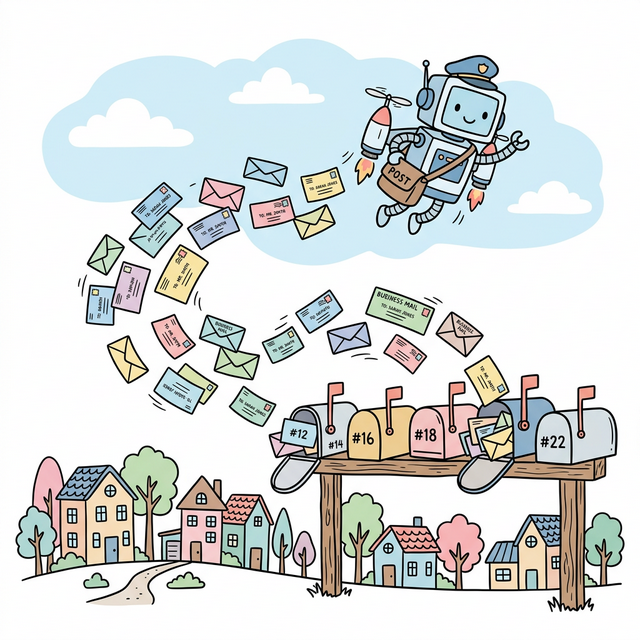
The death of cold email was greatly exaggerated by marketing influencers in 2024, but the method of cold email has entirely changed. In 2026, no one responds to a generic, templated automated email cadence blasted out to an untargeted list.
The new, highly profitable side hustle involves building fully autonomous Multi-Agent Outbound Systems for B2B service companies (like commercial roofing contractors, enterprise accounting firms, or custom software development shops).
Using sophisticated orchestration tools like Openclaw or CrewAI, you don't just set up an email sequence; you build an entire digital SDR (Sales Development Representative) team for a client that does hours of manual research before sending a single message.
The Tech Stack
- Data Sourcing: Apollo.io (for pulling massive intent-based lead lists).
- Data Enrichment: Clay.com (for scraping live news, LinkedIn posts, and recent company data).
- Orchestration Engine: CrewAI or AutoGen (to pass the enriched data to reasoning agents).
- The LLM: GPT-4o or Claude 3.5 Sonnet (for drafting the personalized copy).
- Sending Infrastructure: Smartlead.ai or Instantly (to handle mailbox rotation and deliverability).
The Execution Blueprint
Instead of blasting 10,000 generic emails to a list of "CEOs in Texas," your agentic pipeline executes the following workflow for every single lead:
- Agent A (The Scraper) parses the lead's company website and their personal LinkedIn. It discovers the Lead recently spoke on a podcast about "supply chain logistics in a post-pandemic world."
- Agent B (The Analyst) pulls the transcript of that podcast via API, reads it, and extracts the core thesis the Lead argued.
- Agent C (The Copywriter) drafts a highly personalized, 3-sentence plain-text email. It explicitly cites the specific timestamp from the podcast, connects their thesis to your client's specific software offering, and asks for a 10-minute call.
- Agent D (The Dispatcher) routes the email to the sending infrastructure, waits for a reply, and automatically manages Calendly bookings if the lead responds favorably.
The Economics and Pricing Model
You are no longer selling "email marketing." You are selling pipeline generation.
- Setup Fee: Charge B2B SaaS companies a $3,000 to $5,000 upfront setup fee to architect this agentic pipeline, register the burner domains, and warm up the mailboxes.
- Performance Commission: Take a 10% to 15% commission on any closed, won deals generated directly by your agentic system. If your client sells a $50,000 enterprise software contract, you make $5,000 while you sleep.
2. On-Premise Local AI Deployment
Small and Medium Businesses (SMBs) like local law firms, medical clinics, regional banks, and CPAs have massive, unstructured data problems. They have decades of PDFs, client notes, and legal briefs.
They know AI could solve their document querying problems instantly, but they are terrified of putting highly confidential, regulated client data (HIPAA, GDPR, CCPA, FINRA) into public clouds like OpenAI or Anthropic.
This compliance fear creates a massive, high-ticket opportunity for the Local AI Deployment Specialist.
Your hustle is to deploy robust, open-source Large Language Models (like Llama 3 70B, Command R+, or local variants of Mistral) directly onto the local, physical servers or isolated Virtual Private Clouds (VPCs) of these businesses. You guarantee air-gapped security, ensuring that their proprietary data never leaves their building and is never used to train external models.
The Tech Stack
- The Model Host: Ollama or vLLM (to serve the underlying model weights securely).
- The Vector Database: ChromaDB or Milvus (installed locally to handle Document Embeddings).
- The Embeddings Model: Nomic-Embed-Text (an open-source model that turns PDFs into math).
- The User Interface: AnythingLLM or Open WebUI (so the client's employees have a ChatGPT-style interface on their local intranet).
The Execution Blueprint
- The Audit: You perform an initial $500 consulting audit. You identify where their critical unstructured data lives (SharePoint, local NAS drives, legacy filing systems).
- The Hardware Specs: You spec out the required hardware. For most SMBs, a dedicated desktop rig with two Nvidia RTX 4090 GPUs (roughly $5,000 to $7,000 total cost) is more than enough VRAM to run a highly capable 70-Billion parameter quantized model locally. The client buys this hardware.
- The Deployment: You install the Linux environment, configure Ollama, set up the Vector Database, and write local Python scripts to chunk and ingest their gigabytes of PDFs into the local vector store.
- The Result: The law firm's paralegal can now type into a local UI: "Search the 2018 Smith vs City zoning documents and list all mentions of water boundary disputes." The local AI answers instantly, with citations, without ever pinging the internet.
The Economics and Pricing Model
- Implementation Fee: Charge a flat consulting and deployment fee of $7,500 to $15,000 to build the secure, air-gapped Retrieval-Augmented Generation (RAG) system.
- Retainer: Charge a $1,000/month recurring retainer for system maintenance, fine-tuning the embedding pipelines, and upgrading the open-source model weights as new models are released to the public.
3. "Vertical" Data Labeling for Model Fine-Tuning
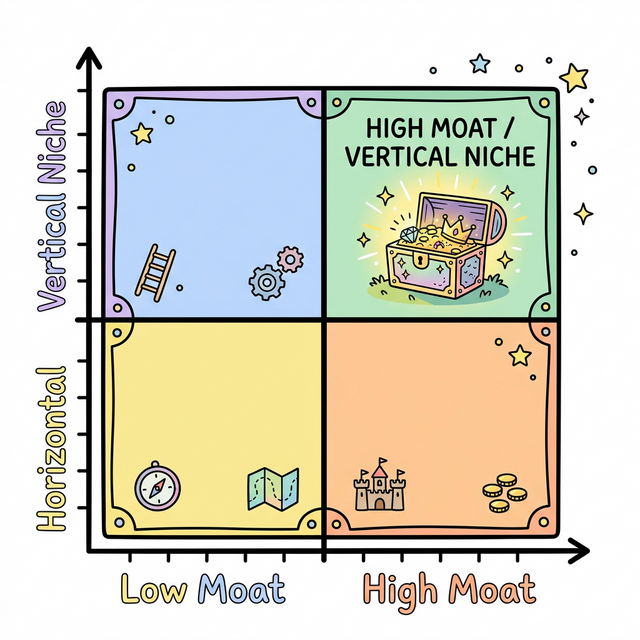
As detailed in the 2026 AI landscape, generalist horizontal AI is entirely commoditized. It is cheap and ubiquitous. The true multi-billion dollar gold rush is in Vertical AI—hyper-specialized models trained on extremely narrow, proprietary datasets to become savants in one specific industry.
However, Vertical AI companies face a massive bottleneck: they desperately need highly clean, formatted, specialized data to train their models, and the open internet does not contain this data. Generative AI cannot generate accurate training data for itself; it fundamentally requires human ground-truth.
If you have domain expertise in a specific, boring, or highly technical niche (e.g., commercial HVAC schematics, municipal property tax codes, veterinary dental x-rays, or aviation maintenance logs), you can monetize that deep knowledge without ever learning how to code.
You start a side hustle sourcing, cleaning, formatting, and labeling this highly specialized proprietary data, and then selling it directly to AI startups and enterprise companies who desperately need it to fine-tune their horizontal models.
The Tech Stack
- Annotation Tools: Labelbox or Snorkel (enterprise-grade data labeling software).
- Formatting: Deep expertise in JSONL (JSON Lines) format, which is the standard for fine-tuning LLMs with Question/Answer pairs.
- Data Sourcing platforms: Industry-specific forums, local government FOIA requests, or manual digitization of legacy hard-copy manuals.
The Execution Blueprint
- Identify the Niche: Do not pick "healthcare." Pick "Canine Periodontal Disease Diagnostic Criteria."
- Source the Dirty Data: Partner with local clinics, execute public records requests, or manually scrape highly obscure industry databases.
- The Human Loop: You spend 100 hours manually reviewing the data. For text, you format it into perfect
{"messages": [{"role": "user", "content": "..."}, {"role": "assistant", "content": "..."}]}JSONL lines. If you are doing image labeling, you meticulously draw bounding boxes around specific anomalies in the HVAC schematics. Quality control is paramount; if your data involves "hallucinations" or lazy tagging, it is useless to the buyer. - The Sale: You reach out to HuggingFace, specialized AI investment portfolios, or Enterprise tech divisions building in that sector.
The Economics and Pricing Model
- Direct Sales: You do not sell access to an app; you sell a raw intellectual asset. A perfectly curated, hand-verified dataset of 10,000 highly technical QA pairs in a starved industry can sell outright for $25,000 to $100,000+.
- API Royalties: Alternatively, you can host the data and charge enterprise modelers thousands of dollars a month via API access to continuously pull the latest, cleanest training updates.
4. Hyper-Niche Prompt Engineering (The "CustomGPT" Flipper)
In 2023, generic "Prompt Engineers" sold PDF guides containing prompts like "Write a blog post in the style of Hemingway." By 2026, the underlying models are smart enough to infer style intrinsically. The role of the generalist prompt engineer is dead.
However, the Hyper-Niche Prompt Engineer is operating one of the highest-margin software businesses on the internet.
Instead of writing prompts for general, horizontal use, you build highly complex, intricately architected CustomGPTs (or specialized Assistants via the OpenAI Assistants API) that solve one excruciatingly exact problem perfectly. You wrap that prompt in a cleanly designed interface, and you flip it or sell subscriptions to the exact micro-demographic it serves.
The Tech Stack
- The Backend: Vercel to host the serverless functions.
- The API Engine: The OpenAI Assistants API or Anthropic's message endpoints.
- The Database & Auth: Supabase (for storing user generations and handling login).
- The Paywall: Stripe integrations to charge per-generation or monthly subscriptions.
The Execution Blueprint
Examples of Micro-GPTs that sell rapidly in 2026:
- A custom Assistant fed with the explicit internal grading rubrics of the AP US History exam. High school teachers upload student essays; the tool outputs a perfect score breakdown mapped exactly to the College Board's required competencies.
- A custom tool fed the highly complex municipal building codes for Maricopa County, Arizona. General contractors upload their raw architectural PDFs; the tool flags specifically which structural allowances violate the 2026 updated HVAC local ordinances.
- A tool that converts chaotic, unstructured real estate inspector notes dictated via voice intro a pristine, legally compliant Texas State property inspection PDF.
The Economics and Pricing Model
- The Micro-SaaS Model: You host the wrapped application and sell access to the specific profession it serves for $29, $49, or $99 a month.
- The Flipper Model: Once the Micro-GPT hits $500 in Monthly Recurring Revenue (MRR), you list it on marketplaces like Acquire.com or Flippa. These specific, hyper-niche AI tools frequently sell for 3x to 4x Annual Recurring Revenue (ARR). A tool making $1,000 a month will often flip outright for $40,000 in cash.
5. AI Voice Automation for Local Services
Conversational AI voice models have crossed the uncanny valley. In 2026, using tools like Bland.ai, Vapi, or ElevenLabs' conversational frameworks, the AI is virtually indistinguishable from a human over a compressed cell phone network. It breathes, pauses, says "um," and handles dynamic interruptions perfectly.
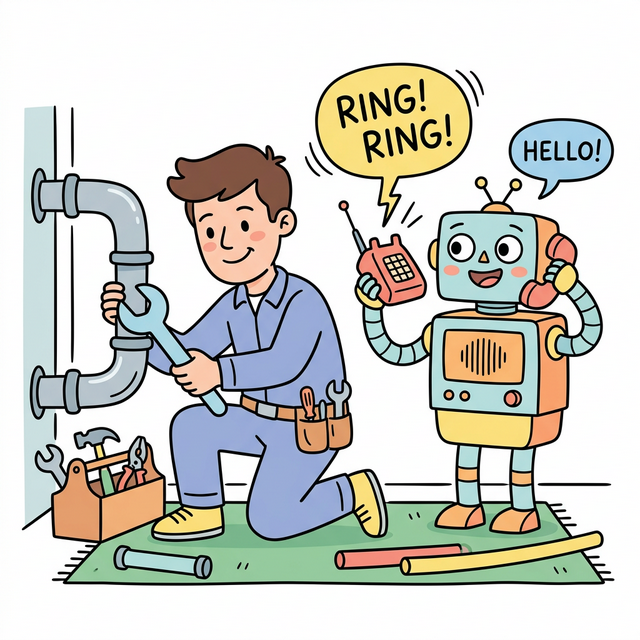
Local service businesses (plumbers, HVAC technicians, locksmiths, roofers) lose tens of millions of dollars collectively every single year in missed phone calls while the owner is under a sink, on a roof, or sleeping.
Your side hustle is the Local Voice Automation Agency.
You do not sell "AI." You sell "No more missed leads." You build a custom voice assistant that answers inbound missed calls, parses the customer's problem, negotiates dispatch fees, checks the local roofer's Google Calendar via API, and books the appointment directly on their schedule.
The Tech Stack
- The Voice Engine: Vapi.ai or Bland.ai (these handle the complex sub-500ms latency routing between Speech-to-Text, LLM processing, and Text-to-Speech).
- The Number Integration: Twilio (to port their existing business number or forward missed calls).
- The CRM Orchestration: Make.com or Zapier (to read/write the appointment onto their ServiceTitan dashboard or Google Calendar).
The Execution Blueprint
- The Pitch: Call a local plumber. When they send you to voicemail (which they inevitably will), leave a message generated by a Voice AI. When they call back stunned, explain that you can build that exact receptionist for their business to catch every single call they miss.
- The Architecture: You use Vapi.ai to define the "System Prompt" of the receptionist. You dictate the pricing structure exactly: "You are Sarah, dispatch for Bob's Plumbing. If they say it is an emergency leak, quote the $150 dispatch fee. If they accept, check Bob's calendar and offer the next available slot."
- The Safety Walls: You implement rigorous boundary testing to ensure the AI NEVER offers discounts or attempts to diagnose plumbing issues over the phone (a massive hallucination risk).
The Economics and Pricing Model
- Setup Fee: Charge a $1,500 to $3,000 upfront setup and training fee. This covers building out the logic trees, connecting the APIs to their specific booking software, and rigorous testing.
- Performance / Usage Billing: Charge the plumber $2 for every successful, qualified appointment booked. Alternatively, charge a flat $500 monthly retainer for software maintenance and 24/7 receptionist coverage.
The Invisible Architecture: Why the AI Agency Model Crushes the Solo Freelancer Model
When you observe the mechanics of the 5 side hustles listed above, you will notice a distinct, structural difference from traditional side hustles advised in 2022 or 2023. None of these five examples involve you, the entrepreneur, acting as a human "freelancer."
You are not trading your time for an hourly wage to write a blog post. You are not charging a flat fee to manually edit a video. You are not operating as a fractional CMO. Instead, you are building an AI Agency Model (often referred to as an AI Automation Agency, or AAA).
Understanding the mathematical distinction between a Freelancer and an AI Agency Owner is the difference between making $5,000 a month working 60 hours a week, and making $50,000 a month working 10 hours a week.
The Mathematics of the Time-for-Money Trap
Traditional freelancing is bounded by the unyielding laws of physics. If you are a high-end freelance copywriter charging $150 an hour, and you want to scale your side hustle to $20,000 a month, you must physically type for 133 billable hours.
To achieve 133 billable hours, you must likely work 200 total hours taking into account client acquisition, revisions, and administrative overhead. This means you have successfully built yourself a grueling full-time job, not a side hustle. Your revenue ceiling is hard-capped by your biological need to sleep, eat, and avoid burnout.
When generative AI entered the market in 2023, panicked freelancers attempted to use ChatGPT to simply work faster. The sequence was:
- Client asks for a 2,000 word article.
- Freelancer uses ChatGPT to generate it in 5 minutes.
- Freelancer edits it for 30 minutes.
- Freelancer bills the client for 3 hours of "work."
This was an unstable arbitrage. By 2026, clients possess the exact same tools. They no longer pay humanity a premium for speed when the machine offers instant delivery. The freelance model has collapsed.
The Mathematics of Scalable Automation Architecture
The AI Agency Model ignores speed entirely. Instead, it focuses on Asset Creation and Decoupled Revenue.
When you build a Custom Local AI deployment for a law firm (Hustle #2), or a Multi-Agent B2B pipeline for a SaaS company (Hustle #1), you are acting as an architect. You spend 20 hours building a highly complex, interconnected digital machine involving specialized software (Vapi, CrewAI, ChromaDB, HuggingFace models).
Once that digital machine is built, your time input drops to zero. However, the economic output of the machine continues indefinitely.
- You sell the machine's initial construction for a massive, high-ticket setup fee ($3,000 to $15,000).
- Because the machine requires APIs, database hosting, and LLM token usage to remain "alive," you charge a monthly recurring maintenance retainer ($500 to $2,000) or take a percentage of the revenue it generates.
Infinite Leverage
Because the revenue is decoupled from your biological output, you possess Infinite Leverage.
If you want to scale a Voice Automation Agency (Hustle #5) from 1 plumbing client to 50 plumbing clients across the United States, you do not need to hire 50 human receptionists. You do not need an office building. You do not need to interview candidates or manage payroll taxes.
You simply duplicate the identical Vapi.ai voice model. You duplicate the Make.com routing webhook. You change the plumber's name and pricing sheet in the system prompt. You connect a new Twilio number.
The setup takes 45 minutes of cloning templates. The machine instantly answers 1,000 simultaneous phone calls perfectly, negotiating dispatch fees without ever putting a customer on hold. Your marginal cost of replication approaches zero, while your revenue scales exponentially.
This is the fundamental secret of wealth generation in 2026. You must stop trying to compete with AI on the basis of output velocity, and you must start selling the structural implementation of the AI itself. You are not the factory worker generating the widgets; you must become the factory owner architecting the assembly line.
The Future of the Side Hustle
The common thread across all five of these 2026 AI side hustles is undeniable context: You are doing the hard, physical, or highly specific integration work that an Answer Engine cannot instantly replace.
If your business revolves around sitting at a laptop and manually clicking a button to generate a generic block of text or a generic image, you have zero defensible moat. The consumer can click that button themselves.
But if your business revolves around solving intense, localized privacy issues, navigating proprietary commercial databases, or architecting frictionless voice-to-API automations, the ceiling for your side hustle has never been higher. AI is the great equalizer, but implementation is the ultimate differentiator.
Get the Blueprint: Want to launch a profitable AI business from scratch? Grab The Ultimate AI Toolkit ($19) — a 200+ page framework featuring exact implementation steps for content automation, consulting, and AI agency building.

Alex the Engineer
•Founder & AI ArchitectSenior software engineer turned AI Agency owner. I build massive, scalable AI workflows and share the exact blueprints, financial models, and code I use to generate automated revenue in 2026.
Related Guides
How to Check Your VRAM for AI (Windows & Mac)
Before you install tools like Ollama or try to run Llama 4 locally, you need to know your VRAM. Here is a simple, visual guide to finding your computer's VRAM on Windows and macOS.
The Ultimate Openclaw AI User Guide (2026): Setup, Skills, and Orchestration
Learn how to install Openclaw, write custom SKILL.md files, and use ClawHub.ai to build secure, local AI agents that never send your data to the cloud.
Terminal for Absolute Beginners: The No-Jargon Guide (Mac & Windows)
Never used a terminal before? This step-by-step guide teaches you what the command line is, how to open it on Mac and Windows, and the 10 essential commands every beginner needs.